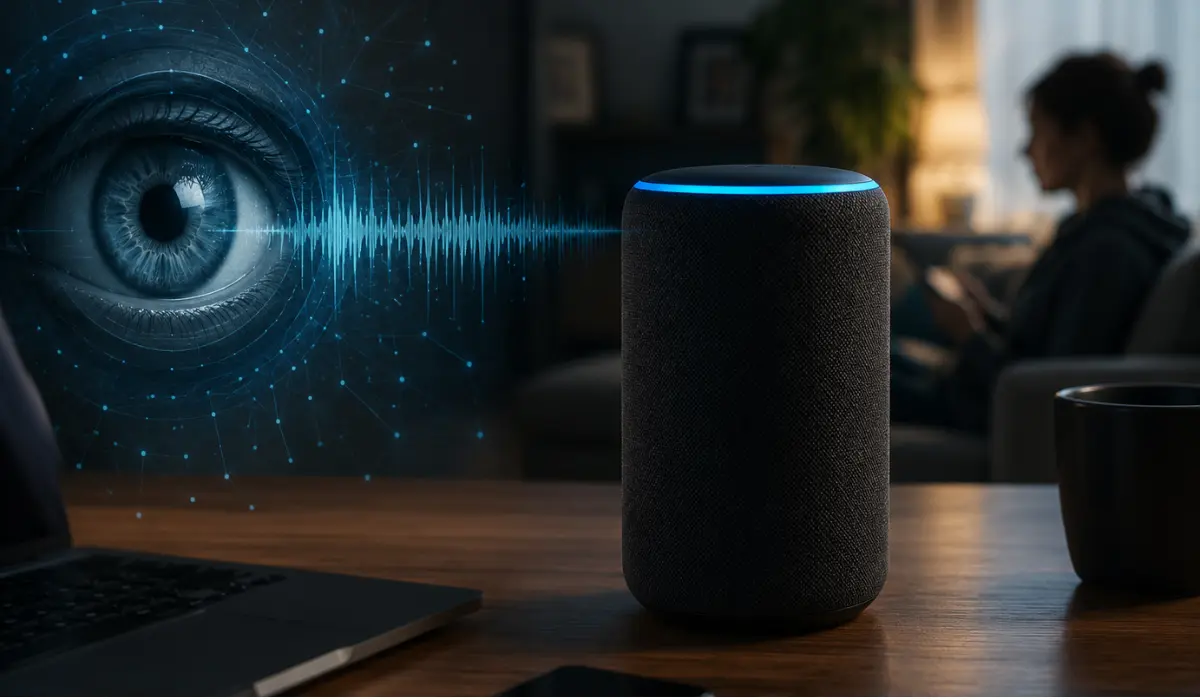
OpenAI Is Building a Screenless AI Companion for Homes
What We Know About OpenAI’s Upcoming AI Device
OpenAI is not trying to build another basic smart speaker that only answers simple questions or controls a few devices. The company’s vision is to create a screen-free AI companion that can interact with users in a more natural way. The device is expected to be portable, allowing people to move it around their homes while continuing conversations without interruption. Instead of using a phone, computer, or traditional interface, users could communicate with AI through voice interactions.
The main difference between this device and older smart assistants is the level of intelligence behind it. Traditional voice assistants usually depend on specific commands and predefined responses. They can complete simple tasks, but they often struggle with complex conversations. OpenAI wants to change this experience by using advanced AI models that can understand context, remember previous discussions, and provide responses based on a user’s situation.
The company’s goal is to create an AI system that feels more like a personal assistant rather than a simple machine. The device could potentially help users manage daily activities, control smart home appliances, answer questions, and provide suggestions based on previous interactions. This vision represents a larger trend in the AI industry where companies are trying to make artificial intelligence more integrated into everyday life.
However, creating a highly personalized AI companion also introduces new challenges. For an AI system to understand users better, it needs access to more information. This creates concerns about privacy, data collection, and how companies handle personal details. The success of this type of technology will depend on whether companies can provide powerful features while protecting user trust.
Why OpenAI’s AI Speaker Sounds Similar to Amazon Echo
The Smart Speaker Market Already Exists
The smart speaker industry is not a new concept. Amazon introduced Echo devices years ago and created one of the first major consumer markets for voice-controlled assistants. These devices allowed users to play music, ask questions, check information, and control smart home products through simple voice commands. Millions of people became familiar with the idea of speaking to a device inside their homes.
OpenAI’s planned AI speaker appears different because it combines smart speaker functionality with advanced artificial intelligence. Modern AI models can understand more complex conversations, generate detailed answers, and adapt to different situations. This creates the possibility of a smarter and more interactive experience compared to traditional voice assistants.
However, the basic concept remains familiar. A device that sits inside your home, listens to your voice, and responds to your requests is something consumers have already seen. This is why some people compare OpenAI’s product to an upgraded version of Amazon Echo rather than a completely new invention. The biggest difference is not the speaker itself but the intelligence powering it.
OpenAI believes that AI capabilities can completely transform the smart speaker category. Instead of simply following commands, the company wants the device to understand users and become a daily companion. The challenge is proving that this experience is valuable enough for people to purchase another connected device and allow it into their homes.
The company must also convince users that the benefits outweigh the concerns. Consumers today are more aware of privacy risks, and they expect technology companies to provide stronger security and transparency. A successful AI device will require more than impressive features. It will require trust.
The $6.5 Billion Hardware Investment Raises Business Questions
Can OpenAI Make Hardware Profitable?
Building hardware is completely different from building software. Software companies can grow quickly because they can serve millions of users without dealing with physical production. Hardware companies face additional challenges, including manufacturing costs, supply chain management, product design, customer support, and competition from established brands.
OpenAI has built its reputation through software products, especially ChatGPT. However, entering the hardware industry requires a different approach. The company has reportedly invested billions of dollars to build a hardware team and bring experienced professionals into the organization. This shows that OpenAI believes AI-powered devices could become a major part of the future.
The financial challenge is significant because consumer hardware requires massive sales volume. Companies need millions of customers to recover development costs and create sustainable profits. Even experienced technology companies have struggled when entering hardware markets because competition is intense and customer expectations are extremely high.
This type of investment requires careful technology leadership and strategic planning. A fractional cto can help organizations evaluate major technology decisions by focusing on long-term value, scalability, architecture, security, and business outcomes instead of following industry hype. OpenAI must prove that its AI advantage is strong enough to overcome the traditional difficulties of hardware development.
The company is making a huge bet that AI companions will become an important part of everyday life. However, the market will decide whether consumers actually want such a device or whether it becomes another expensive technology experiment.
mation, the existence of a legal dispute creates uncertainty around the entire project. Hardware development depends on long-term planning, engineering resources, manufacturing partnerships, and product timelines, so even a temporary legal setback can increase costs and delay market entry.
Beyond the courtroom, the lawsuit also affects public perception. Consumers often judge technology companies not only by the products they build but also by how they conduct business. When a company preparing to launch a device that could sit inside millions of homes is simultaneously dealing with legal questions about intellectual property, trust becomes harder to establish. Even if the legal process eventually favors OpenAI, the company must still convince customers that it can responsibly manage both innovation and user confidence. Entering the hardware market is already difficult, and adding legal uncertainty only increases the pressure on OpenAI to deliver a product that justifies its enormous investment.
Privacy Concerns Around an AI Device That Knows Everything
A Camera, Microphone, and Email Access Inside Your Home
Privacy is the biggest concern surrounding OpenAI’s AI speaker because the product is designed to become increasingly personal over time. According to the reported vision, the device is expected to understand conversations, recognize user habits, and provide proactive assistance rather than simply responding to commands. That level of intelligence requires continuous interaction with users, which naturally raises questions about what information is collected, how it is stored, and who ultimately controls it. Many consumers already have mixed feelings about smart speakers that remain connected throughout the day. An AI companion capable of understanding behavior patterns creates an even greater responsibility for the company developing it.
Trust cannot be treated as an optional feature when building AI hardware. People are far more protective of their homes than they are of websites or mobile applications because the home represents a private environment. If users believe an AI device knows too much about their routines, personal preferences, or conversations, they may hesitate to adopt it regardless of how advanced the technology becomes. OpenAI therefore faces a challenge that goes beyond engineering. It must demonstrate that powerful AI can exist without making users feel like they are sacrificing their privacy. In the coming years, transparency around data collection, security practices, and user control may become just as important as the AI capabilities themselves.
The Problem With Cloud-Based AI Dependency
Users Depend on Company Servers and Pricing Decisions
Another important discussion raised by OpenAI’s hardware strategy is its dependence on cloud infrastructure. Most modern AI systems process information through company-owned servers instead of running directly on personal devices. This approach makes advanced AI accessible to millions of users, but it also means customers depend on the provider’s infrastructure, pricing, service availability, and future business decisions. If subscription costs increase, usage limits change, or features become restricted, users have little control because the intelligence exists outside their own environment.
For businesses, this dependency can become an operational concern rather than simply a financial one. Organizations integrating AI into daily workflows need consistency, predictable costs, and long-term stability. Relying entirely on external cloud platforms may create challenges if pricing models change or services evolve in unexpected ways. This discussion has encouraged many technology leaders to think more carefully about AI ownership instead of focusing only on convenience. As artificial intelligence becomes part of critical business operations, companies increasingly want solutions that provide greater flexibility and control over how their systems operate.
Local AI Agents Offer a Different Approach
Running AI Without Sending Data to the Cloud
One of the most interesting alternatives mentioned in discussions around AI infrastructure is the growing popularity of local AI systems. Instead of sending every request to cloud servers, local AI allows models to run directly on hardware controlled by the user or business. This approach gives organizations greater ownership of their technology while reducing dependence on external platforms. Rather than relying entirely on subscription-based AI services, businesses can build environments that fit their own security requirements and operational needs.
Local AI also supports a broader philosophy of technology ownership. Organizations handling sensitive information often prefer systems that allow them to manage data internally instead of transmitting it across external networks. Open-source projects have accelerated this movement by giving developers the freedom to customize AI solutions according to their specific requirements. OpenMonoAgent.ai as an example of this local-first approach, emphasizing AI systems that users can operate independently instead of relying completely on cloud providers. While cloud AI will continue to play an important role, the discussion around local AI shows that many businesses now value privacy, customization, and infrastructure ownership alongside performance.
What OpenAI’s AI Speaker Means for the Future of AI
OpenAI’s decision to invest heavily in AI hardware reflects a broader shift happening across the technology industry. Artificial intelligence is gradually moving beyond software applications and becoming part of physical products designed for everyday use. Companies are exploring ways to make AI more accessible through devices that remain available throughout the day instead of requiring users to open an application whenever they need assistance. If successful, this approach could redefine how people interact with technology by making conversations with AI feel more natural and continuous.
At the same time, the future of AI hardware will depend on much more than technical performance. Consumers now expect companies to deliver strong security, responsible data practices, and clear explanations of how their information is used. Businesses also expect AI investments to produce measurable value instead of simply following industry trends. OpenAI’s speaker represents both opportunity and risk because it combines impressive technological ambition with significant privacy, legal, and business challenges. Whether the product succeeds will depend not only on the quality of the AI but also on the level of trust the company earns from customers.
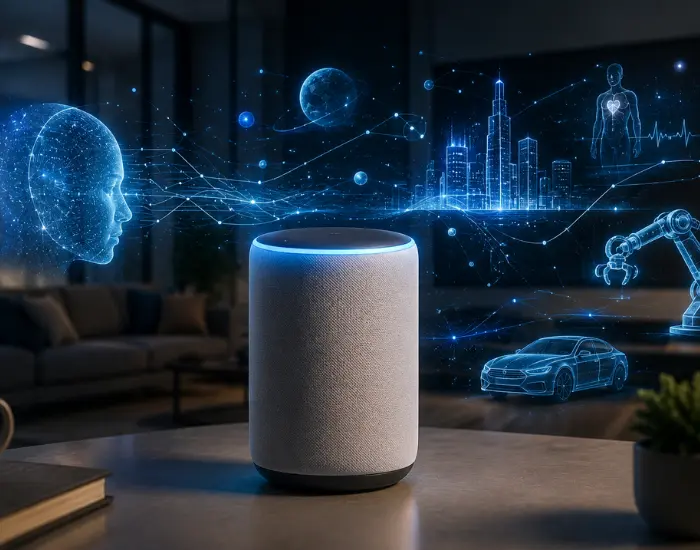
Conclusion: The Future of AI Depends on Trust, Control, and Ownership
OpenAI’s reported $6.5 billion investment in an AI speaker demonstrates how quickly artificial intelligence is expanding beyond software into consumer hardware. The company envisions a future where AI companions become a natural part of everyday life, helping users through conversations instead of traditional interfaces. While that vision is ambitious, it also raises important questions about privacy, legal responsibility, hardware economics, and long-term customer trust. These challenges will shape how consumers respond to AI-powered devices in the years ahead.
The broader lesson is that successful AI products will require more than advanced language models or impressive demonstrations. Companies must balance innovation with transparency, security, and responsible technology leadership. Businesses evaluating AI strategies should carefully consider where their data is processed, how much control they retain, and whether their infrastructure supports long-term growth. As conversations across the industry continue to evolve, platforms like startuphakk highlight the importance of building AI solutions that prioritize ownership, trust, and practical value rather than relying solely on hype. The next generation of artificial intelligence will be defined not only by what it can do but also by how responsibly it is designed, deployed, and trusted by the people who use it every day.