


AI Tokens Are Cheaper Than Ever
The cost of using AI models has fallen significantly over the past few years. Businesses now pay much less for each token than they did when modern AI tools first became popular. These lower prices have encouraged organizations to integrate AI into software development, customer support, content creation, and business automation. Many executives viewed falling token prices as proof that AI would become more affordable over time. Unfortunately, the reality has been very different. Although the price of individual tokens has decreased, the total amount of AI being used inside organizations has increased much faster. Instead of reducing costs, businesses are consuming more AI resources than ever before. The result is that monthly AI spending continues to grow even while token pricing continues to fall.
Why Businesses Are Paying More Despite Lower Token Prices
The biggest reason behind rising AI expenses is simple. Companies are asking AI to perform much larger and more complex tasks than before. Early AI applications focused mainly on simple conversations or content generation. Today’s AI agents can analyze large documents, write software, review code, automate workflows, generate reports, and perform multi-step reasoning across different systems. Every one of these tasks requires additional AI processing. Each workflow consumes thousands of tokens instead of hundreds. As organizations expand AI usage across multiple departments, overall token consumption increases dramatically. Lower token prices encourage more AI adoption, which ultimately creates higher monthly costs. Businesses are no longer paying more because AI is expensive. They are paying more because they are using AI far more frequently than they ever planned.
Why AI Costs Are Becoming Impossible to Predict
Traditional software subscriptions are easy to budget because they usually charge a fixed monthly or yearly fee. AI services work very differently. Most cloud AI platforms charge based on usage. Every prompt, every response, and every automated process adds to the final invoice. This makes forecasting AI expenses much more difficult. One team may increase AI usage for software development while another department launches new automation projects at the same time. Small changes in employee behavior can significantly increase monthly AI costs. Finance teams often struggle because AI spending changes constantly instead of remaining predictable. Organizations that expected AI to behave like traditional software subscriptions are now realizing that token-based pricing requires an entirely different budgeting strategy.
The Enterprise AI Cost Problem
Many businesses have already experienced the financial impact of uncontrolled AI usage. Large organizations have consumed enormous volumes of AI tokens within only a few months, leading to unexpected invoices worth millions of dollars. Other companies have responded by limiting employee access to AI tools or placing monthly spending caps on development teams. Some organizations have even paused AI pilot programs because operating costs became much higher than originally expected. These situations demonstrate that AI adoption without cost management can quickly become a serious financial challenge. Businesses must now balance innovation with long-term cost control if they want AI investments to remain sustainable.
Why More Companies Are Looking at Local AI
As cloud AI costs continue increasing, many organizations are exploring local AI deployment. Running AI models locally allows businesses to avoid recurring API charges because AI processing happens on hardware they own. Instead of paying for every token, organizations invest in infrastructure that supports unlimited local inference. This approach provides greater cost predictability while giving businesses complete control over their AI environment. Local AI also reduces dependence on third-party providers and allows organizations to manage their own infrastructure without worrying about changing pricing models or monthly token limits.
OpenMonoAgent and Local AI Development
One example of this approach is OpenMonoAgent.ai, a platform designed to help developers run AI models locally instead of relying entirely on cloud APIs. The platform supports local inference, integrates with Visual Studio Code, and uses structured playbooks to guide AI workflows. Because AI processing happens locally, businesses avoid recurring API costs while maintaining full ownership of their development environment. The platform also emphasizes private AI development by eliminating telemetry and reducing dependence on external AI providers. This allows developers to build AI-powered software while keeping their data and workflows under their own control.
A Real Experience Using Local AI
The advantages of local AI become clearer through real-world experience. During an interview, Mark, a retired healthcare technology leader, explained how he became interested in local AI after returning to software development. Limited hardware prevented him from running modern AI models until he received a local inference system. After setting up OpenMonoAgent, he was able to begin experimenting with AI using the Visual Studio Code integration. He also appreciated the structured playbook system because it reflected the software development practices he had used throughout his career. His experience demonstrated that developers do not need to become machine learning experts to begin using local AI effectively.
Why Privacy and Compliance Matter
Organizations working with regulated information face additional challenges when using cloud AI services. Industries such as healthcare and finance often manage sensitive records that cannot be freely shared with third-party AI providers. Local AI helps address these concerns by keeping data inside the organization’s own environment instead of sending information to external services. This gives businesses greater confidence when working with confidential information while supporting compliance requirements for regulated industries. For many organizations, privacy is becoming just as important as cost savings when choosing an AI strategy.
Playbooks Improve AI Reliability
Playbooks provide structure for AI workflows by defining clear instructions, boundaries, and development processes. Instead of allowing AI models to generate unpredictable responses, playbooks guide the model toward more consistent results. They also support better testing, clearer requirements, and improved software development practices. This structured approach allows organizations to achieve reliable outcomes while reducing errors during AI-assisted development. Strong workflows often improve overall performance, even when using smaller open-source AI models.
Affordable Hardware Makes Local AI Practical
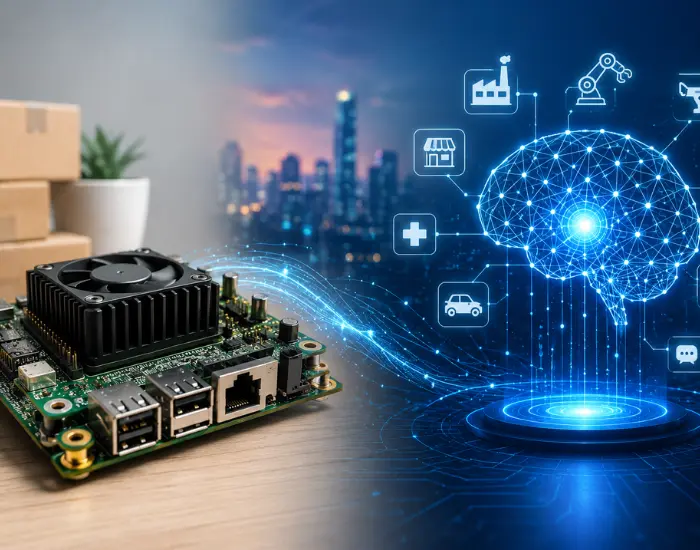
Local AI no longer requires expensive enterprise servers. Modern consumer hardware is powerful enough to support many AI development tasks. Compact inference systems and graphics cards with sufficient memory allow developers to run open-source AI models directly from their own machines. Smaller models perform efficiently on this hardware, making local AI accessible to both individuals and businesses. Instead of paying continuous API fees, organizations can make a one-time hardware investment that supports long-term AI development without recurring token costs.
AI Infrastructure Needs Strong Technical Leadership
Technology decisions have long-term consequences. Businesses that implement AI without a clear strategy often face rising costs, complex integrations, and disappointing results. This is where experienced technical leadership becomes valuable. A fractional cto helps organizations evaluate AI investments, design scalable architecture, integrate AI into existing systems, and avoid unnecessary spending. Rather than chasing every new AI trend, businesses benefit from building reliable infrastructure that supports long-term growth. Strong leadership ensures AI becomes a strategic business asset instead of another unpredictable operating expense.
Why Businesses Should Treat AI as Infrastructure Instead of a Subscription
Many organizations still approach AI as if it were another software subscription. They expect predictable monthly costs and assume that lower token prices will automatically reduce expenses. In reality, cloud AI works on a usage-based pricing model. Every prompt, code generation request, automated workflow, and AI agent interaction increases the monthly bill. As AI becomes part of everyday business operations, these small costs quickly accumulate into significant expenses.
Treating AI as infrastructure offers a different approach. Instead of paying for every interaction with an external model, businesses invest in hardware they own and control. This creates predictable operating costs and removes the uncertainty of token-based billing. Organizations can expand AI adoption without worrying that increased usage will lead to unexpected invoices. Over time, owning AI infrastructure can become more cost-effective than relying entirely on cloud services.
Local AI Delivers More Than Lower Costs
Reducing operational expenses is only one advantage of running AI locally. Businesses also gain complete control over their development environment. Local AI allows teams to choose their preferred models, manage their own infrastructure, and keep critical workloads inside their own systems. This level of control helps organizations build solutions that align with their technical and business requirements instead of depending on changing pricing models from external providers.
Developers also benefit from greater flexibility. They can experiment, test new ideas, and build AI-powered applications without constantly monitoring token usage. This encourages innovation while removing financial barriers that often slow down AI adoption. As a result, development teams can focus on creating better software instead of worrying about API costs.
Privacy and Compliance Are Becoming Critical
As businesses adopt AI across more departments, protecting sensitive information has become a major priority. Organizations in healthcare, finance, legal services, and other regulated industries cannot afford to expose confidential data to unnecessary risks. Customer records, financial information, and internal business documents require strong privacy controls throughout the entire AI workflow.
Running AI locally helps address these concerns by keeping data inside the organization’s own environment. Instead of sending sensitive information to external services, businesses process everything on infrastructure they control. This approach supports stronger security practices, improves compliance, and gives organizations greater confidence when using AI for mission-critical tasks.
Structured Workflows Produce Better AI Results
Successful AI implementation requires more than choosing the right language model. Businesses also need structured processes that guide AI toward consistent and reliable outcomes. Clearly defined workflows help developers reduce errors, improve accuracy, and create repeatable results across different projects.
Using structured playbooks allows teams to establish clear requirements, define development standards, and maintain consistency throughout the software lifecycle. This approach combines traditional software engineering principles with modern AI capabilities, making AI development more predictable and easier to manage. Organizations that focus on process as well as technology are more likely to achieve long-term success.
Affordable Hardware Is Changing AI Adoption
Building a local AI environment no longer requires expensive enterprise servers. Modern consumer hardware provides enough performance to run many open-source AI models efficiently. Developers and businesses can now build capable AI workstations using affordable GPUs with sufficient memory for everyday development tasks.
This shift has made local AI accessible to startups, independent developers, and enterprise teams alike. Instead of committing to ongoing API expenses, organizations can invest once in hardware and continue using AI without worrying about recurring token charges. As hardware continues to improve, local AI will become an increasingly practical option for businesses of every size.
The Importance of Technical Leadership
AI adoption should be guided by a long-term strategy rather than short-term trends. Businesses that implement AI without proper planning often face rising costs, disconnected systems, and disappointing results. Strong technical leadership helps organizations avoid these problems by ensuring AI supports real business objectives instead of becoming another expensive experiment.
An experienced fractional cto can help businesses evaluate AI opportunities, design scalable architectures, integrate AI into existing systems, and establish governance for future growth. This strategic approach allows organizations to invest in technologies that deliver measurable value while maintaining control over cost, security, and long-term scalability.
Conclusion
Artificial intelligence is becoming more powerful and more affordable at the same time. However, lower token prices do not automatically reduce business expenses. As organizations automate more workflows and deploy more AI agents, overall token consumption continues to grow. This makes cloud AI increasingly difficult to budget and manage.
Local AI offers a practical solution by providing predictable costs, greater privacy, full ownership, and unlimited local inference without recurring API charges. Businesses that invest in their own AI infrastructure can reduce long-term expenses while maintaining complete control over their data and development environment. Combined with strong engineering practices and experienced technical leadership, this approach creates a more sustainable path for enterprise AI adoption. Companies that focus on building AI as long-term infrastructure instead of treating it as another subscription service will be better positioned for future growth. That vision of practical, scalable, and business-focused AI continues to drive innovation at startuphakk.


