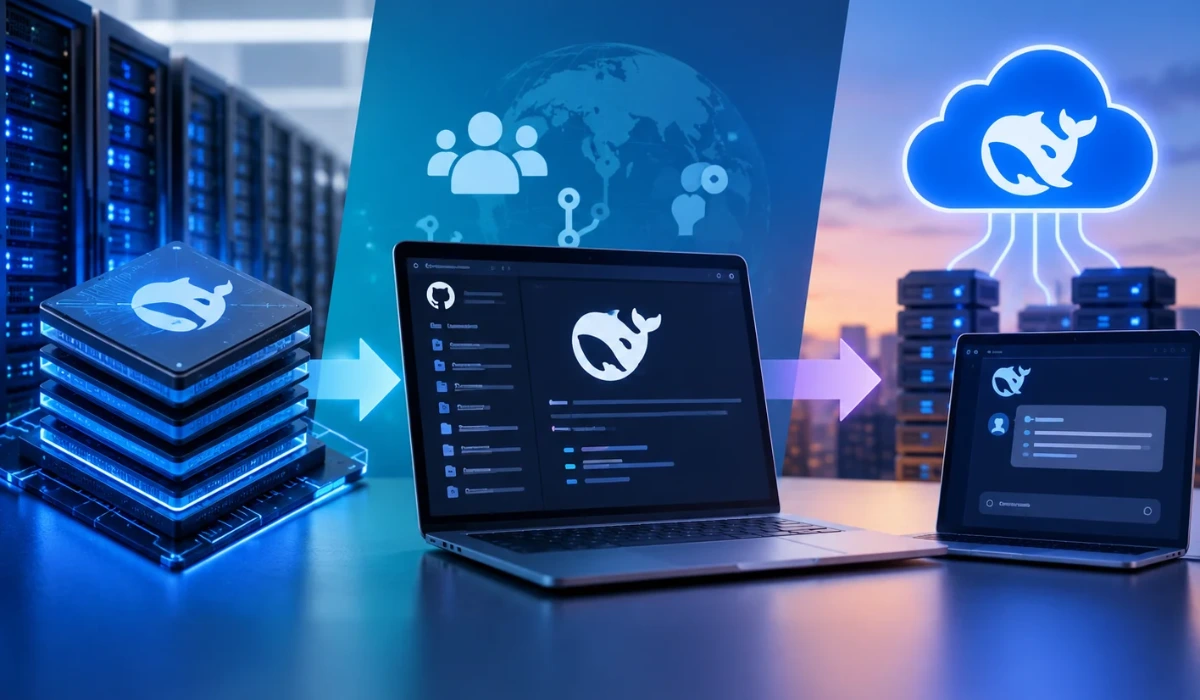
What Is the Problem With Closed-Source AI?
Closed-source AI platforms have played an important role in making artificial intelligence popular. They provide powerful models that anyone can access through simple interfaces. Users do not need to manage servers, install models, or maintain hardware. This simplicity is one of the biggest reasons why businesses and developers quickly adopted these tools.
However, the main limitation is ownership. When users depend on a closed AI model, they depend on the company that controls it. The provider decides how the model is updated, how it behaves, and what features are available. Users have no direct control over these decisions.
This becomes a challenge when AI becomes part of important business processes. Developers often create applications and automation systems around specific AI capabilities. If the provider changes the model behavior or removes certain features, those systems may require updates and adjustments.
The problem is not that closed AI models are weak. In fact, many of them are extremely powerful. The concern is that users are building important technology on systems they do not own. As AI becomes more important, control and independence become equally valuable.
Why AI Control Matters
Control is one of the most important factors when choosing any technology. Businesses need tools that not only provide strong performance but also give them stability and flexibility. When companies depend completely on external AI platforms, they lose the ability to make important decisions about their own technology.
With closed AI systems, users cannot modify the model according to their specific requirements. They cannot freely adjust performance, change internal settings, or decide how updates should affect their workflows. They must follow the structure provided by the platform owner.
Local AI provides a different approach by giving users more freedom. Developers can choose which models they want to run, customize their performance, and create workflows based on their own needs. This allows teams to build AI systems that support their goals instead of adapting everything around a third-party platform.
For growing companies, this level of control can be extremely valuable. Technical leaders, including a fractional cto, can help organizations evaluate their AI requirements and decide whether owning their AI infrastructure makes sense for long-term growth.
The Benefits of Running AI Locally
Running AI locally gives developers more flexibility and control over how their systems operate. Instead of depending on a single cloud provider, users can manage their own models and customize their AI environment according to their requirements. This approach allows developers to make decisions based on their specific needs rather than following fixed options provided by external platforms.
One of the biggest advantages of local AI is the ability to optimize models. Developers can use techniques like quantization to reduce the resources required to run AI models while maintaining useful performance. This makes it easier to run powerful AI systems on standard hardware without needing expensive infrastructure. Model distillation is another important capability that allows users to create smaller and more efficient versions of models while keeping their core abilities.
Local AI also gives users the ability to work with multiple models. Different models can perform better for different tasks. One model may be more suitable for coding, while another may provide better results for specific workflows. With a local setup, developers can switch between models and choose the right option for each requirement instead of being locked into a single AI service.
Another important benefit is customization. Users can adjust their AI systems based on their goals. They can increase performance when they need advanced capabilities or reduce resource usage when efficiency is more important. This level of control allows developers to create AI environments that match their exact workflow.
Own Your Entire AI Stack
Owning an AI stack means having control over the complete system that powers your artificial intelligence workflow. Instead of only accessing an AI service, users manage the models, configurations, and resources behind that service. This creates more independence and allows businesses to build technology that they fully understand.
When companies depend on closed AI platforms, they are limited by decisions made by external providers. They have to accept changes in pricing, availability, model behavior, or features. These changes can affect development processes and create uncertainty for teams that rely on AI every day.
A local AI approach removes many of these limitations. Developers can decide which models they want to use and how those models should operate. They can test different options, improve their workflow, and make changes whenever necessary. This freedom allows teams to create more stable and reliable AI-powered applications.
For businesses, owning the AI stack can also create long-term benefits. Instead of continuously depending on external services, companies can invest in their own AI infrastructure. This gives them more control over their technology decisions and helps them build systems that support their future goals.
How OpenMonoAgent.ai Helps Developers Take Control
Managing local AI systems can seem difficult for users who are new to running models on their own hardware. Setting up models, managing resources, and creating a reliable workflow requires technical knowledge. This is where solutions designed for local AI management can make the process easier.
OpenMonoAgent.ai focuses on helping developers bring AI control back to their own systems. It provides a way for users to work with their own AI stack instead of depending completely on closed platforms. The goal is to give developers more ownership over how their AI tools work.
With a local AI approach, developers can create workflows that fit their specific requirements. They can decide which models to use, how those models should perform, and how their systems should be organized. This flexibility is useful for developers who want more freedom when building AI-powered applications.
The future of AI development will not only depend on creating larger and more powerful models. It will also depend on giving users better control over those models. Having the ability to manage, customize, and optimize AI systems will become an important advantage for developers and businesses.
You Don’t Need Enterprise Hardware
Many people believe that running AI locally requires expensive enterprise-level hardware. They imagine that only large companies with advanced infrastructure can operate their own AI systems. However, modern hardware improvements have made local AI more accessible than before.
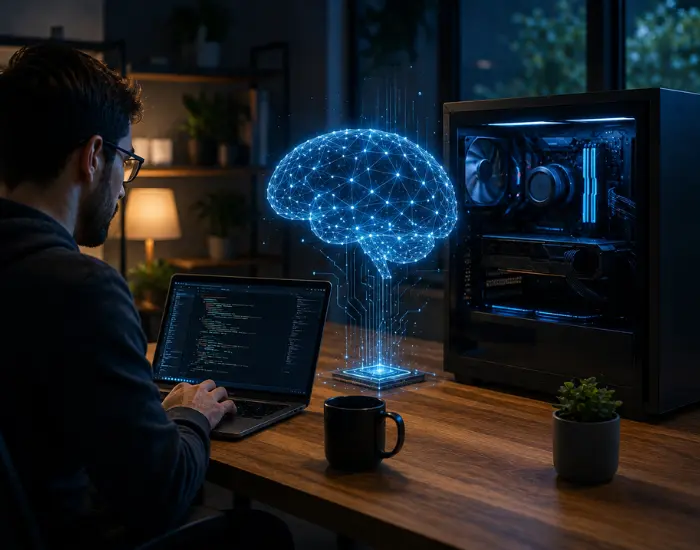
Developers do not always need massive servers or expensive data center equipment. A capable consumer GPU can provide enough power for many local AI workflows. This makes it possible for individual developers, startups, and smaller businesses to experiment with AI ownership without making huge investments.
The advantage of owning hardware is that it becomes a long-term asset. Instead of continuously paying for AI usage through external platforms, users can invest in their own system and run models whenever they need them. This approach provides more control over costs and usage.
Local AI does not mean every business must completely avoid cloud platforms. Instead, it provides another option for users who want more independence. Developers can choose the approach that fits their needs and create a balance between convenience and control.
Why Local AI Could Become the Future of AI Development
The future of artificial intelligence will not only depend on how powerful AI models become. It will also depend on how much control users have over those models. Businesses and developers are starting to understand that having access to AI is not enough. They also need the ability to customize, manage, and optimize the technology according to their own requirements.
Closed-source AI platforms will continue to play an important role because they provide convenience and quick access to advanced models. They allow users to start working with AI without managing technical infrastructure. However, local AI provides an alternative for those who need more ownership and flexibility.
As AI becomes a bigger part of software development, control will become a major factor in technology decisions. Companies will want systems that they can depend on for the long term. They will look for solutions that allow them to manage their tools instead of relying completely on external providers.
Local AI gives developers the freedom to experiment and innovate. They can test different models, adjust performance, and create workflows that match their goals. This approach allows AI to become a customizable tool rather than a fixed service with limited options.
The shift toward local AI does not mean cloud AI will disappear. Both approaches can work together. Cloud platforms provide convenience, while local systems provide control. The right choice depends on the needs of each user and organization.
Conclusion
Artificial intelligence is becoming an essential part of modern technology, but control over AI systems is becoming equally important. Closed-source platforms provide powerful tools, but users often have limited control over how those systems change over time. Local AI models offer a different approach by giving developers ownership, flexibility, and the ability to customize their technology.
Running AI locally allows users to optimize models, switch between different options, and create workflows that match their specific needs. Instead of depending completely on decisions made by external providers, developers can manage their own AI environment and decide how their systems should work.
The idea behind local AI is simple: users should have more control over the technology they rely on. They should be able to adjust their models, manage their resources, and build solutions that support their long-term goals. With the right hardware and tools, running AI locally is becoming more accessible for developers and businesses.
Solutions like OpenMonoAgent.ai represent this shift toward AI ownership by helping users take control of their own AI stack. As the AI industry continues to grow, understanding these changes will become important for anyone building software, automation systems, or AI-powered products.
For developers and technology leaders who want to stay updated on AI trends, software innovation, and the future of development, platforms like startuphakk continue to provide insights into how emerging technologies are changing the way we build and use digital solutions. The future of AI will not only belong to those who use powerful models but also to those who understand how to control and adapt them.