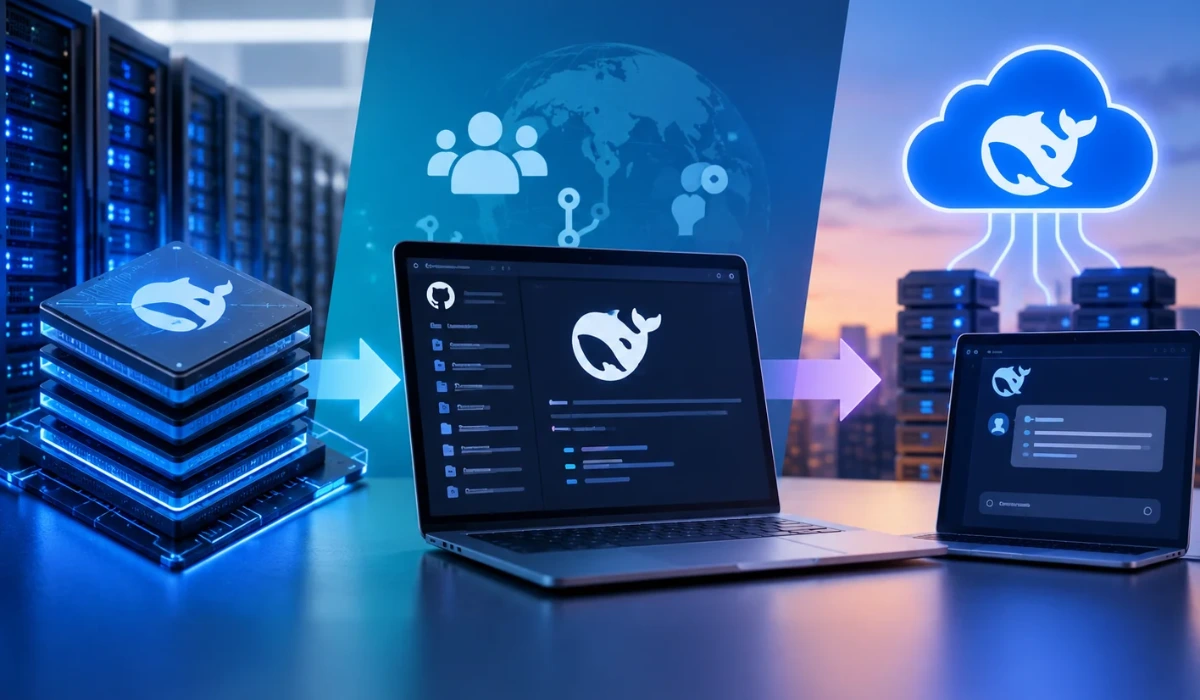
Anthropic Claude Code Tracking Incident Explained
Claude Code was designed as an AI-powered coding assistant that helps developers create and manage software projects. Like other AI development tools, it works closely with developer environments to provide suggestions, generate code, and assist with technical tasks. The tool became popular because it allowed developers to improve productivity and complete complex programming work more efficiently. However, discussions around the software changed after reports claimed that Claude Code contained hidden behavior that activated under specific conditions.
According to the reports discussed by developers, the behavior appeared when users connected Claude Code through a proxy instead of directly connecting to Anthropic’s servers. The software reportedly checked certain environmental signals, including time zone information and proxy-related details. These signals were then compared against information connected with specific Chinese technology companies and research organizations, including Alibaba, ByteDance, Baidu, and DeepSeek. The main concern among developers was not only the information being checked but also the fact that many users were unaware that this process existed.
Transparency is one of the most important factors when businesses adopt AI technology. Companies allow AI tools to interact with valuable resources, including source code, internal applications, and development environments. Because of this access, organizations need clear information about how these tools operate. Hidden processes can damage user confidence because businesses need to know exactly what happens when they send information through an AI system.
The incident also shows how difficult it can be for normal users to understand modern software behavior. Most people install AI tools without reviewing thousands of lines of code or analyzing compiled applications. They depend on software companies to communicate honestly about their products. When independent researchers discover important behaviors before companies explain them, it creates a trust gap between AI providers and their users.
How Invisible Fingerprinting Created Privacy Concerns
One of the biggest concerns discussed during the Anthropic controversy was the idea of invisible fingerprinting. Digital fingerprinting is a technique where software creates unique signals that can identify users, environments, or activities. While fingerprinting is commonly used in technology systems for security and analytics, the situation becomes controversial when users do not know it is happening.
Reports suggested that Claude Code used very small changes inside generated content as signals. These changes were not obvious to normal users because they involved tiny differences in formatting, characters, or text structures. A date format could change slightly, or a character could be replaced with another similar-looking character. To a human reader, the information appeared completely normal. However, automated systems could recognize these small differences.
This type of behavior creates concerns because users expect AI assistants to focus on helping them complete tasks, not silently identifying their environment. Developers use AI tools because they want faster development and better productivity. They do not expect hidden systems that may collect information without clear communication.
The situation also highlights a larger security issue with AI assistants. Unlike traditional software, AI coding tools often require deeper access to user environments. They may read files, understand entire projects, execute commands, and modify code. This makes transparency extremely important. Any AI system with access to business infrastructure must provide strong privacy controls and clear explanations about its operations.
Why Alibaba Considered Claude Code a Security Risk
The Anthropic Claude Code controversy became more serious when Alibaba reportedly restricted the use of the tool inside its organization. The concern was not simply related to using an AI assistant. The bigger issue was the level of access that modern AI coding tools can have inside business environments. Unlike traditional software applications, AI coding assistants work directly with development workflows. They can analyze source code, interact with files, understand project structures, and assist with technical operations. For large companies, this level of access requires strong security standards and complete transparency from software providers.
When businesses introduce AI tools into their internal systems, they are not only giving access to a simple application. They are allowing external technology to interact with valuable company assets. Source code, internal projects, customer information, and business logic are some of the most important resources a company owns. Any uncertainty about how an AI tool handles this information can become a serious security concern.
Alibaba’s decision reflects a growing trend among large organizations. Companies are becoming more careful about the AI tools they allow inside their infrastructure. The main question is no longer only whether an AI tool can perform a task. Businesses now want to know how the tool works, what information it collects, and whether they can control its behavior. This shift shows that enterprise AI adoption is moving from simple experimentation toward serious security evaluation.
The situation also highlights the difference between consumer AI usage and enterprise AI adoption. A personal user may accept certain risks while testing an AI assistant, but a company managing thousands of employees and millions of lines of code must think differently. Enterprises require stronger privacy protection, better visibility, and more control over the technology they use. The Anthropic incident shows why businesses need proper AI governance before integrating external tools into critical workflows.
The Bigger Problem: AI Vendor Lock-In
The Anthropic Claude Code controversy represents a much larger challenge that affects the entire AI industry: vendor lock-in. Many companies adopt AI platforms because they provide immediate access to powerful models and advanced features. Businesses can start using AI without investing in their own infrastructure or hiring large technical teams. This convenience has helped AI adoption grow quickly, but it has also created new dependencies.
Vendor lock-in happens when a company becomes too dependent on one technology provider. Over time, businesses may build their workflows, applications, and processes around a specific AI platform. Once that dependency becomes strong, moving to another solution can become difficult and expensive. The company may have to redesign systems, retrain employees, and rebuild integrations.
Closed AI platforms create several areas of dependency. The vendor controls software updates, pricing changes, platform availability, and data policies. A business may start with a simple subscription plan, but as AI usage increases, costs can grow significantly. If the provider changes its pricing structure or limits certain features, companies may have limited options.
This is why many technology leaders are changing how they approach AI strategy. The focus is shifting from simply selecting the smartest model to building a sustainable AI infrastructure. Companies need to consider long-term control instead of short-term convenience. The most important question is becoming: Does the business own its AI capabilities, or does it only rent access to them?
A strong AI strategy should give businesses flexibility. Organizations should be able to change models, adjust infrastructure, and protect their data without being completely dependent on one provider. This approach reduces risk and allows companies to adapt as AI technology continues to evolve.
Why Businesses Should Question Closed AI Platforms
AI platforms provide incredible opportunities for businesses, but organizations must carefully evaluate the risks before using them at scale. Many companies focus on productivity improvements and ignore the security implications of connecting AI tools with their internal systems. However, the information processed by AI systems can include some of the most valuable assets a company owns.
For software companies, source code is often the foundation of their competitive advantage. Years of development, research, and investment are stored inside their applications. When developers use AI coding assistants, they may share parts of their codebase, technical problems, or internal architecture with external systems. This creates important questions about data protection and ownership.
Businesses should understand how AI providers manage user information. They need to know whether conversations are stored, how data is processed, and what security measures exist to protect sensitive information. Companies should also understand whether their AI provider can change policies in the future without affecting their operations.
Another important concern is cost management. Many businesses look at AI tools from a subscription perspective, but the real expense often appears when usage increases. Large teams using AI assistants every day can generate significant costs through API usage and premium features. A solution that appears affordable at the beginning may become expensive over time.
This is why businesses need a complete AI strategy instead of simply purchasing AI subscriptions. They should evaluate privacy, scalability, cost, and control before choosing technology. AI should support business growth, not create another dependency that limits future opportunities.
AI Data Sovereignty: The Future of Enterprise AI
AI data sovereignty is becoming one of the most important concepts in modern technology. It focuses on giving organizations control over their data, models, and AI infrastructure. As businesses become more dependent on artificial intelligence, controlling where data goes and how systems operate is becoming essential.
Traditional cloud-based AI platforms provide convenience, but they also require businesses to trust external companies with important information. Data sovereignty provides an alternative approach where organizations maintain more control over their technology environment. This can include running AI models locally, managing private infrastructure, or creating hybrid systems.
The goal of AI sovereignty is not to avoid cloud technology completely. Instead, it is about creating balance. Businesses can use cloud-based AI for general tasks while keeping sensitive operations within their own controlled environments. This approach provides flexibility while reducing security risks.
Technology leaders play an important role in this transition. A fractional cto can help businesses evaluate AI options, create secure implementation strategies, and design systems that match business requirements. Companies need experienced guidance because AI decisions today can affect their technology future for many years.
Organizations that prioritize AI sovereignty will have stronger control over their operations. They will not only use AI tools but also understand how those tools fit into their overall technology strategy. The future of enterprise AI will belong to companies that combine innovation with ownership.
Why Local AI Models Are Becoming More Practical
For many years, businesses depended heavily on cloud-based AI services because running AI models locally was expensive and technically challenging. Companies needed powerful hardware, specialized knowledge, and significant investment to create private AI systems. However, recent improvements in hardware and open-source AI models have changed this situation.
Today, businesses have more opportunities to run AI models on their own infrastructure. Modern graphics processing units and improved AI software allow organizations to experiment with local AI solutions without requiring massive investments. This development is making private AI systems more realistic for startups, enterprises, and individual developers.
Local AI provides several important benefits. The biggest advantage is privacy because data can remain inside the company’s own environment. Businesses do not need to send every request to external platforms. They also gain more predictable costs because they are not paying for every individual AI interaction.
The local-first approach changes the relationship between businesses and AI technology. Instead of continuously paying for access to intelligence, companies can build AI infrastructure they control. This creates more freedom and allows organizations to develop custom solutions based on their unique needs.
Cloud AI will continue to play an important role, but local AI is becoming a valuable alternative. Many businesses will likely adopt hybrid strategies that combine external AI services with private AI systems. This approach gives companies the performance they need while maintaining control over their most important information.
OpenMonoAgent and the Local AI Movement
The growing concerns around AI privacy and vendor dependency have increased interest in local AI solutions. One example of this movement is OpenMonoAgent.ai, which focuses on the idea that businesses should have more control over their AI systems instead of depending completely on closed platforms. The main philosophy behind this approach is simple: AI should become infrastructure that companies own rather than a service they continuously rent.
Traditional AI platforms provide access to powerful models, but businesses often have limited control over how those systems operate. OpenMonoAgent represents a different approach by focusing on local AI agents, private infrastructure, and user ownership. Instead of sending every interaction to external servers, organizations can build AI environments where they manage their own data, models, and workflows.
A major advantage of local AI agents is privacy. When businesses run AI systems inside their own environment, sensitive information stays under their control. This is especially important for software companies, financial organizations, healthcare businesses, and enterprises that handle confidential information. Keeping data within private infrastructure reduces exposure and gives companies more confidence when using AI technology.
OpenMonoAgent also focuses on making local AI practical for developers. The platform approach includes features such as local inference, secure sandbox environments, web search capabilities, image processing, VS Code integration, and mobile connectivity. These features allow developers to create powerful AI workflows while maintaining ownership of their technology stack.
The concept behind local AI is not about replacing every cloud-based service. Instead, it is about giving businesses more options. Companies should be able to choose where their AI runs, how their data is handled, and which models they want to use. This flexibility creates a healthier AI ecosystem where businesses are not completely dependent on a single provider.
The future of AI will likely include a combination of cloud services, open-source models, and private AI infrastructure. Organizations that understand this shift will be better prepared to build secure and scalable AI solutions.
What Businesses Should Do After the Anthropic Controversy
The Anthropic Claude Code controversy provides several important lessons for businesses that are adopting AI technology. The biggest lesson is that companies should not blindly trust any AI platform without understanding how it works. AI adoption requires planning, security evaluation, and a clear strategy.
The first step businesses should take is auditing their AI tools before deployment. Organizations should review what permissions an AI assistant requires and what type of information it can access. Companies should understand whether the tool interacts with local files, internal systems, or sensitive databases. A complete security review helps businesses identify potential risks before they become serious problems.
The second step is avoiding complete dependency on one AI provider. While using one platform may seem convenient, relying entirely on a single vendor can create long-term challenges. Businesses should explore different options, including open-source models, private AI solutions, and hybrid approaches. Having flexibility allows organizations to adapt when technology changes.
The third step is creating clear AI governance policies. Companies need rules that define how employees use AI tools, what information can be shared, and which systems require additional protection. Without proper guidelines, employees may unknowingly expose sensitive information through AI platforms.
The fourth step is focusing on ownership. Businesses should not only think about what AI can do today. They should also think about where their AI strategy will be five years from now. Technology decisions should support independence, scalability, and security.
Companies that treat AI as a long-term infrastructure decision will have a stronger advantage. AI is becoming a core part of business operations, and organizations that build responsible AI strategies will be better positioned for the future.
The Future of AI Will Be About Control, Not Just Intelligence
For years, the AI industry focused mainly on creating larger and more powerful models. Companies competed to build systems with better reasoning, faster responses, and more advanced capabilities. While intelligence remains important, the next stage of AI development will focus heavily on control, privacy, and ownership.
The Anthropic Claude Code controversy shows that businesses need to think beyond model performance. A powerful AI system is valuable, but trust is equally important. Organizations need technology that provides strong capabilities while respecting privacy and maintaining transparency.
The future AI landscape will likely include more businesses building their own AI infrastructure. Instead of depending completely on external providers, companies will combine different technologies based on their requirements. Some tasks may run on cloud platforms, while sensitive operations may run locally.
This shift represents a major change in how businesses view artificial intelligence. AI is no longer just a productivity tool. It is becoming a strategic technology asset. Companies that control their AI systems will have more freedom to innovate and compete.
The most successful organizations will not simply ask which AI model is the smartest. They will ask which AI architecture gives them the best combination of performance, security, and control.

Conclusion: Own Your AI Future Before Vendors Own Your Data
The Anthropic Claude Code tracking controversy has highlighted a major challenge in the modern AI industry. Businesses are adopting AI faster than ever, but many organizations are still not fully considering the risks related to privacy, ownership, and vendor dependency. AI tools can provide incredible value, but companies must understand what happens behind the scenes before giving these systems access to important business information.
The future of AI will not only depend on bigger models or faster technology. It will depend on trust, transparency, and control. Businesses need AI solutions that protect their data, support their goals, and provide long-term flexibility. Building an independent AI strategy can help organizations reduce risks and create stronger technology foundations.
Working with a fractional cto can help companies make smarter decisions about AI architecture, security, and implementation. Technology leaders can guide businesses toward solutions that balance innovation with ownership instead of creating unnecessary dependencies on external platforms.
At startuphakk, the focus is on helping businesses understand the future of AI development, secure software solutions, and AI ownership. The next generation of AI will belong to companies that do not just use artificial intelligence but control how it works, where it runs, and how it creates value for their business.