The Dangerous Assumption Behind AI Layoffs
The biggest mistake many organizations make is assuming that AI can fully replace human expertise. That assumption is dangerous because businesses are not built only on tasks. Businesses are built on experience, judgment, creativity, and institutional knowledge. A skilled developer does much more than write code. They understand why systems were designed in a specific way. They know where hidden risks exist inside the infrastructure. They remember past failures, technical compromises, and operational challenges that never appear in documentation.
AI tools do not naturally understand this business context. They can generate outputs based on patterns, but they cannot fully replace years of organizational understanding. This is where many companies begin making strategic mistakes. They remove experienced employees believing AI can take over everything, only to discover later that critical knowledge disappeared with those teams.
Why Companies Replacing Teams with AI Are Struggling
Many businesses that aggressively reduce engineering teams later struggle with technical debt, unstable systems, and rising operational costs. At first, AI-generated workflows look impressive. Teams move faster. Reports get generated instantly. Basic coding tasks become easier. Productivity appears to increase rapidly.
However, over time, the problems become visible. Systems become difficult to maintain. Security risks grow. Software quality starts declining. Infrastructure becomes harder to manage. Eventually, companies spend large amounts of money rebuilding systems that were weakened by poor AI implementation strategies.
This pattern is not new. Businesses have made similar mistakes during outsourcing waves and cost-cutting periods in the past. Short-term savings often create larger long-term operational expenses. AI simply accelerates this risk when organizations remove too much human expertise too quickly.
Experienced developers understand things AI cannot easily infer. They know why certain systems were built in a specific way years ago. They understand edge cases, business logic, and operational dependencies that are never fully documented. Without that context, businesses lose stability.
AI Works Best as a Force Multiplier
AI creates the most value when it supports skilled teams instead of replacing them. It works extremely well on repetitive and predictable tasks. AI can automate documentation, generate boilerplate code, summarize information, and assist with testing. These activities often consume large amounts of developer time.
By automating routine work, companies allow engineers to focus on higher-value responsibilities such as architecture, innovation, product strategy, and problem-solving. This is where AI becomes powerful. The goal should not be replacing people. The goal should be helping teams move faster and operate more efficiently.
Human creativity still matters because AI is fundamentally backward-looking. AI models learn from existing patterns and previously created information. Creativity works differently. It creates something new. Businesses still need humans to make strategic decisions, solve unexpected challenges, and guide innovation. AI can accelerate execution, but skilled professionals still direct the process.
Why Human Creativity Still Matters
Many companies now realize that AI cannot replace strategic thinking or creativity. Software development is not only about generating code. It involves solving business problems, designing scalable systems, and understanding customer needs. AI can assist with those workflows, but it still requires experienced oversight.
This is why technical leadership has become even more important during the AI transition. Many organizations now rely on a fractional CTO to guide AI adoption and infrastructure strategy. A strong fractional CTO helps companies integrate AI tools while protecting scalability, security, and long-term operational stability.
Businesses need leadership that understands both technology and business growth. Without proper technical direction, AI adoption can create confusion, instability, and unnecessary operational risks.
History Shows Technology Creates More Opportunity
History shows that major technological shifts rarely eliminate work completely. Instead, they change how work gets done. When spreadsheet software became mainstream, accountants did not disappear. Businesses simply started performing more financial analysis because the work became faster and cheaper. The same economic pattern is happening with AI.
As AI reduces execution costs, businesses are approving more projects, launching more products, and automating more workflows. This creates even greater demand for skilled professionals who can manage, maintain, and improve those systems.
That is why many AI-focused companies continue expanding their teams while heavily using automation tools. AI increases leverage. Skilled employees can accomplish more work in less time. Faster execution creates more growth opportunities, and growth creates more operational complexity. Instead of reducing the need for engineers, AI often increases the need for experienced oversight and leadership.
The Hidden Risk of AI Dependency
Another major issue many businesses overlook is dependency on external AI platforms. A growing number of companies rely entirely on third-party APIs for AI operations. While these tools are powerful, they also create serious long-term risks.
API pricing can change suddenly. Service outages can disrupt operations. Data privacy concerns can create compliance problems. Businesses operating in finance, healthcare, government, and legal industries face even greater risks because sensitive information cannot always leave internal systems.
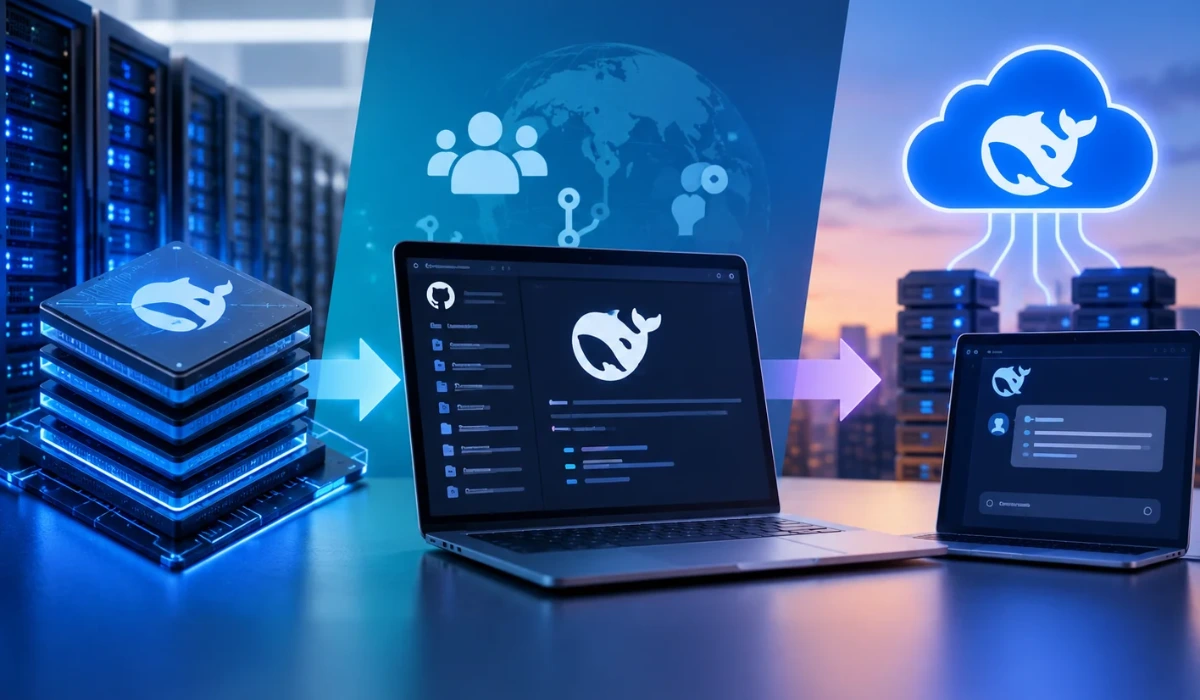
This is why many organizations are now exploring local AI infrastructure and self-hosted AI systems. Companies want more control over their data, workflows, and operational stability. Instead of renting intelligence through subscriptions forever, businesses are starting to build infrastructure they fully own and control. This shift is becoming an important part of enterprise AI strategy.
Why Infrastructure Ownership Matters
Platforms like OpenMonoAgent.ai reflect the growing movement toward AI infrastructure ownership. Instead of depending entirely on cloud-based APIs, businesses can run AI systems locally on their own hardware. This gives organizations greater privacy, operational control, and long-term flexibility.
Open-source AI infrastructure also allows companies to customize systems according to their own workflows and business needs. As AI adoption grows, infrastructure ownership will become increasingly important for companies focused on scalability and sustainability.
Businesses that own their AI stack gain more flexibility. They reduce dependency risks and create systems designed specifically for their operational needs. Over time, this creates stronger long-term advantages.
The Companies That Will Win the AI Race
The businesses that will win in the AI era are not the companies making the fastest layoffs. The winners will be the organizations combining experienced teams with powerful AI tools.
AI amplifies strengths and weaknesses equally. Strong teams become more productive and innovative. Weak systems become more unstable and difficult to manage. Companies that remove too much human expertise risk losing the context and operational knowledge that AI still cannot replace effectively.
The future of business is not humans versus AI. The future belongs to organizations that understand how to combine both successfully. Smart companies are using AI to remove repetitive work, accelerate execution, and improve productivity while still investing in people, leadership, and infrastructure.
Businesses that focus only on short-term cost reductions may struggle later when operational complexity increases.

Conclusion
Artificial intelligence is transforming industries, but it is not eliminating the need for skilled professionals. Human judgment, creativity, and experience remain critical for long-term success. Businesses that empower their teams with AI instead of replacing them will build stronger competitive advantages over time.
Companies guided by experienced leadership, scalable infrastructure, and a clear AI strategy will move ahead much faster than organizations focused only on reducing headcount. The companies succeeding today are not treating AI as a replacement strategy. They are treating it as an acceleration strategy.
This is the mindset driving forward-looking businesses today. Companies that combine AI acceleration with human expertise are building the next generation of sustainable growth. That is also why innovation-focused platforms and communities like startuphakk continue emphasizing the importance of balancing AI capabilities with strong technical teams and long-term business strategy.