
The Shocking Rise of Graduate Unemployment
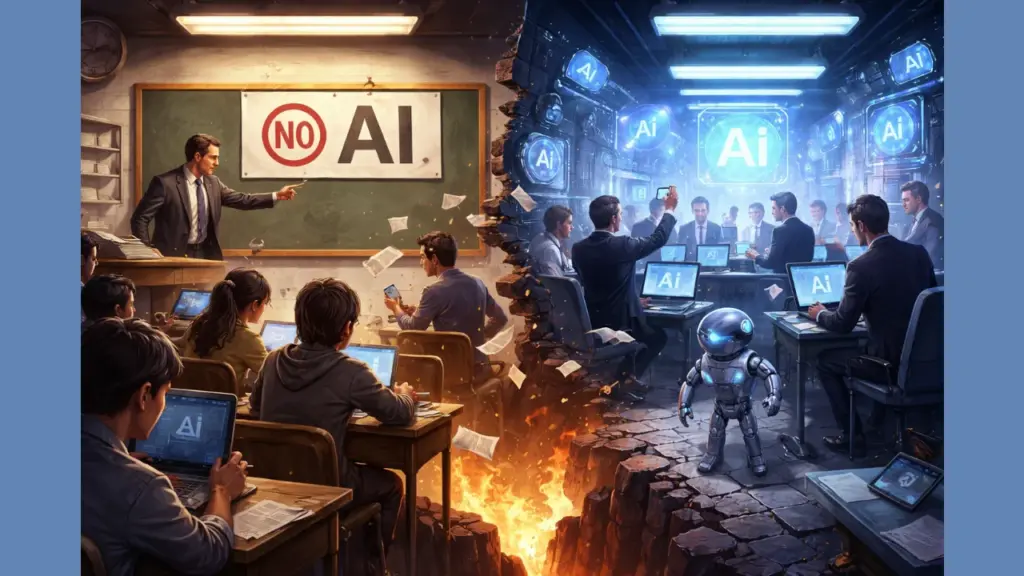
A college degree no longer guarantees employability. Employers once viewed degrees as proof of readiness. Today, they see them as incomplete signals. Many graduates leave school knowing definitions but lacking execution ability. They understand theory but struggle with real constraints. AI widened this gap. Tasks that once justified junior roles now happen automatically. Companies respond by reducing hiring at the bottom. Graduates feel the impact first. The issue is not intelligence. It is relevance. Education stopped evolving at the speed work demands.
AI and the Death of Entry-Level Jobs
Entry-level roles once existed to absorb inefficiency. Businesses trained workers while accepting slower output. AI removed that need. Machines now draft content, review data, generate designs, and assist with coding. These were stepping-stone tasks for new hires. Once automated, they stopped justifying payroll costs. Companies did not change values. They changed incentives. Fewer junior hires now produce the same results. This reality reshapes the job market faster than schools can react.
The Biggest Lie Students Are Being Told About AI
Many institutions still label AI usage as academic misconduct. This belief does more harm than good. AI is not a replacement for thinking. It is a tool that amplifies it. History already proved this pattern. Calculators improved math outcomes. The internet improved research access. AI follows the same trajectory. When schools ban AI, they train students to avoid tools they will later be required to master. Graduates then enter the workforce unprepared and anxious. Employers notice immediately.
What Employers Actually Want in the AI Era
Companies no longer seek memorization. They seek judgment. Employers value people who can collaborate with machines intelligently. They look for workers who know how to ask the right questions, validate outputs, and apply results responsibly. These skills rarely appear on transcripts. They appear through experience. Even leadership roles changed. A modern fractional CTO must understand automation strategy, AI integration, and execution speed. Titles without applied knowledge no longer hold weight. Capability defines value.
The Education System’s Existential Problem
Education systems reward stability. Markets reward adaptation. This mismatch creates failure. Curriculums update slowly. AI evolves rapidly. Academic incentives favor research and tradition. Economic incentives favor output and learning velocity. Students graduate into a world their courses never prepared them for. Institutions do not fail intentionally. They fail structurally. When pressure increases, rigid systems crack. Education now feels that pressure from every direction.
Who Wins and Who Loses in This Shift
This transformation will not distribute evenly. People who learn independently gain advantage. Builders, operators, and AI-native workers move ahead quickly. Those who rely solely on credentials lose momentum. Resistance to tools becomes a liability. The divide is not about talent. It is about responsiveness. The faster someone adapts, the more valuable they become. Those who wait for permission fall behind.
Should Students Still Go to College?
College remains essential in certain professions. Medicine, law, engineering, and research still require formal pathways. Outside these fields, the calculation changes. Education now carries opportunity cost. Students must evaluate outcomes honestly. The critical question remains simple. What skills will I gain that remain valuable in an AI-driven economy? If the answer feels vague, the risk increases. College should be intentional, not automatic.
What This Means for Companies Hiring Graduates
Hiring strategies must evolve as well. Many companies expect graduates to contribute immediately. Graduates expect structured training. This disconnect creates frustration. Progressive organizations adjust by testing real abilities. They value portfolios, simulations, and trial work. They assess learning speed instead of academic history. AI fluency becomes a baseline requirement. Results matter more than resumes. This approach reduces hiring risk and improves long-term performance.
The Role of Fractional Leadership in the New Era
As complexity grows, many companies cannot justify full executive teams. They still need guidance. This reality fuels demand for fractional leadership. A fractional CTO offers strategic clarity, AI adoption guidance, and system oversight without long-term cost. This model works because experience now outweighs credentials. Companies prioritize leaders who have navigated real constraints, not theoretical ones.
The Future of Education After the AI Shock
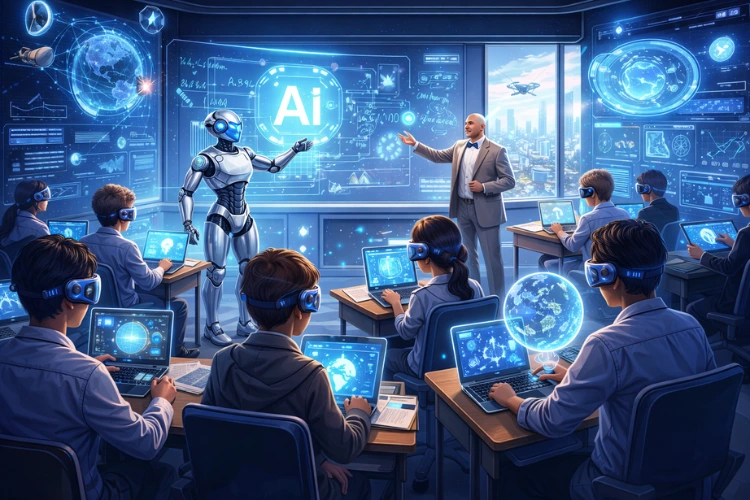
Education will evolve, not vanish. The next phase emphasizes shorter programs, applied learning, and AI-assisted instruction. Evaluation will focus on projects and outcomes. Learning will extend across careers rather than end at graduation. Credentials will lose dominance. Skills will gain priority. Institutions that adapt remain relevant. Those that deny change slowly fade.
Conclusion: Adapt or Be Left Behind
This disruption already shapes lives and careers. AI did not destroy education. It revealed its weaknesses. Students need preparation grounded in reality. Employers need workers who create value immediately. Systems must align with how work actually happens. Ignoring AI will not protect learners. Denying market signals will not save institutions. Adaptation defines survival. That is why platforms like StartupHakk exist—to confront uncomfortable truths early, before reality enforces them without mercy.