1. The Myth of AI Replacing Everyone
The idea that “AI is taking all the jobs” is great for clicks.
It sells newspapers.
It drives panic.
It makes CEOs look innovative, even when their companies are failing.
But here’s the shocking reality: 95% of enterprise AI projects fail.
Most companies cannot even integrate basic automation properly.
They overspend.
They underestimate complexity.
They lack the talent to deploy AI at scale.
So how can a technology that fails 95% of the time be responsible for mass layoffs?
It can’t.
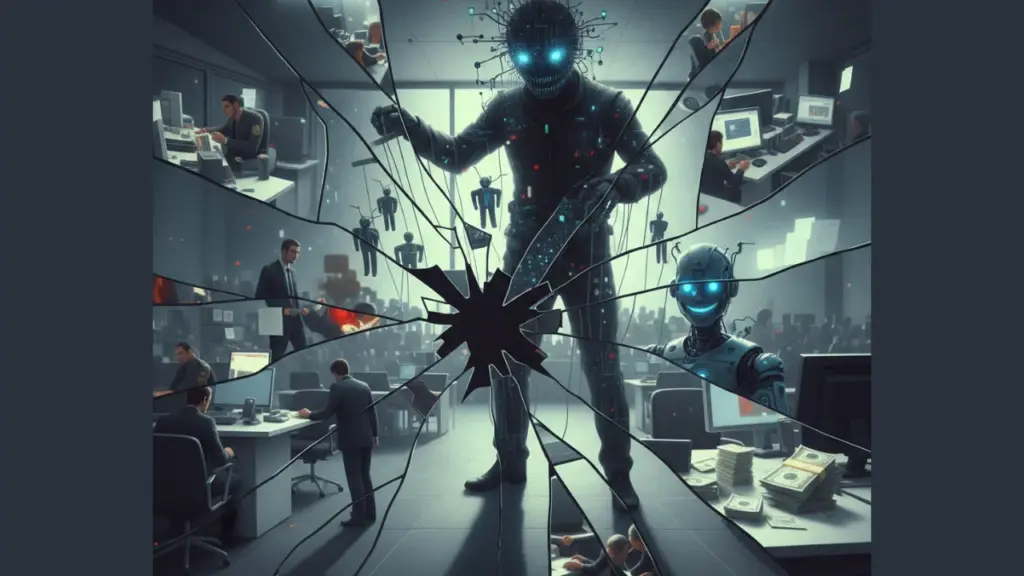
AI is not the job-killing monster the media portrays. It’s a convenient story—a perfect scapegoat for companies that want to cut costs without taking responsibility.
2. Case Study: HP’s 6,000 Layoffs
HP’s announcement captured global attention.
They said they needed to “embrace AI transformation.”
They presented themselves as futurists.
They made it sound like AI improvements were creating operational efficiencies.
But their financial data tells a very different story.
The Real Problem: Their Printer Business Is Dying
For years, HP relied heavily on printers and ink.
But consumer habits changed.
Remote work changed.
People don’t print as much anymore.
Businesses go paperless.
Schools move online.
HP’s core business is shrinking because the world is changing.
Yet instead of admitting weakness in their product strategy, HP blames AI.
It sounds smarter.
It saves face.
It distracts investors from declining product lines.
AI Is a Shield, Not a Cause
When companies fire thousands of people, they don’t want to say:
- “Our products aren’t selling.”
- “We failed to innovate.”
- “We mismanaged our resources.”
- “Our leadership made bad decisions.”
Those statements scare investors, drop stock prices, and expose strategic failures.
So they choose a safer explanation: AI.
It makes them sound future-ready.
It makes layoffs look unavoidable.
It turns a corporate failure into a transformation story.
3. Why Companies Use AI as an Excuse
AI became the perfect excuse at the perfect time.
Here’s why companies use it:
1. It Protects the Brand
Saying “AI replaced these workers” sounds innovative.
Saying “We mismanaged revenue for three years” sounds incompetent.
2. It Calms the Shareholders
Investors love stories about technology transformation.
It makes them believe the company is cutting costs to grow faster.
3. It Hides Financial Failures
If a division is losing money, executives can quietly shut it down and blame AI.
4. It Reduces Employee Backlash
Employees fear AI.
So when companies use AI as a reason, people often accept it—even when it’s not true.
5. It Creates a Futuristic Illusion
A company that fires workers for “AI transformation” sounds like a company preparing for the future.
In reality, it’s often reacting to business decline.
4. The Numbers Don’t Add Up
Let’s break down the logic.
If AI were actually replacing workers:
- AI project success rates would be high.
- Companies would show increased productivity.
- Operational costs would decrease dramatically.
- Companies would report consistent financial growth.
But none of that is happening.
Instead:
- Most AI projects fail.
- Productivity is stagnant or declining.
- Companies overspend on AI tools they don’t understand.
- Revenue drops continue across multiple industries.
The narrative simply does not match the data.
Companies are not firing people because of AI.
They are firing people while pretending AI is the reason.
5. What’s Actually Causing Job Losses
If it isn’t AI, then what is it?
Here are the real reasons employees are losing their jobs today:
1. Declining Product Lines
Many companies rely on old products that no longer match customer needs.
2. Over-Hiring During the Pandemic
Businesses hired aggressively during remote work growth.
Now they are shrinking back.
3. Outsourcing and Contracting
Instead of hiring full-time employees, companies use cheaper external teams.
4. Poor Leadership
Executives make risky bets.
They cut R&D.
They ignore market changes.
They follow trends too late.
5. Shift Toward Leaner Teams
Companies want fewer employees and more automation—not necessarily AI, but basic tools.
6. Investor Pressure
Public companies need to show profits every quarter.
Cutting staff is the fastest way to do that.
7. Market Saturation
Many industries face slowdowns that have nothing to do with AI.
This is the truth — uncomfortable but real.
6. The Dangerous Narrative Companies Are Creating
Blaming AI does more than hide problems.
It creates a false narrative that hurts workers long-term.
1. It Creates Fear
Employees believe they are disposable.
They panic.
They accept lower wages.
They stay quiet.
2. It Discourages Skill Growth
If AI will take all jobs anyway, why bother learning?
3. It Normalizes Layoffs
Companies treat layoffs as part of “technology transformation.”
It removes accountability.
4. It Hides Leadership Failures
Executives escape scrutiny.
They can repeat the cycle every few years.
5. It Confuses Public Perception
People assume technology is the enemy.
But the enemy is often mismanagement disguised as innovation.
7. What Workers Should Actually Prepare For
Let’s be honest:
Your job isn’t at risk because AI is replacing you.
Your job is at risk because companies are making decisions that prioritize short-term gains over long-term stability.
Here’s what you should really prepare for:
1. Understand Business Trends
Look beyond the headlines.
Study industry reports.
Watch product performance.
2. Build Real Skills
AI literacy helps.
But so does strong communication, leadership, and critical thinking.
3. Learn How AI Actually Works
Most people fear AI because they don’t understand it.
Learn the basics.
You’ll see that most of the hype is exaggerated.
4. Consider Fractional Roles
Many professionals now work as fractional leads, including fractional CTO roles.
Companies prefer flexible talent.
It increases your career resilience.
5. Focus on Adaptability
Industries evolve.
Products evolve.
Business needs evolve.
Adaptation protects you more than fear.

Conclusion
The truth is simple: AI is not the villain, and it’s not stealing your job or replacing the workforce at the speed the headlines claim. Companies are using AI as a mask to cover financial losses, shrinking product lines, and leadership mistakes. When you look at the data—not the headlines—the real story becomes clear. The math doesn’t add up because the narrative never matched reality in the first place. Now that you understand the truth, you can prepare smarter, learn faster, and protect your future. This conversation is not about fear; it’s about clarity, empowerment, and awareness. And if you want deeper insights into business, technology, and the future of work, platforms like StartupHakk continue to uncover the truths companies don’t talk about.