The Layoff Announcement That Blamed AI
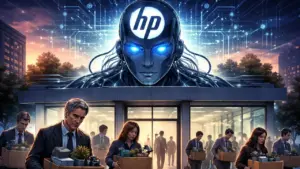
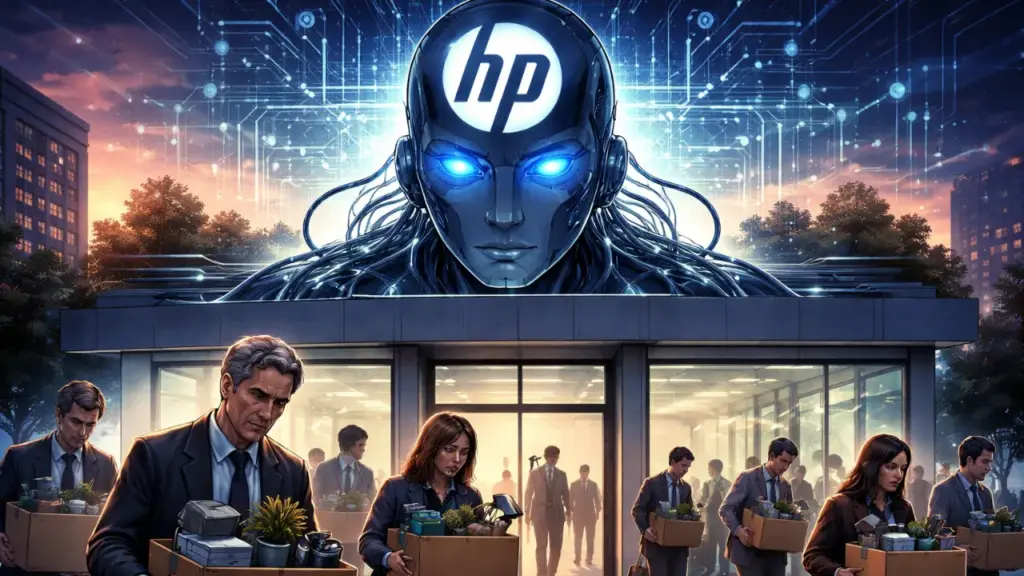
HP’s announcement relied heavily on future-focused language. Executives spoke about efficiency, modernization, and long-term transformation. The term “AI” appeared prominently, signaling progress and adaptation. This choice of words was not accidental. Investors respond positively to innovation narratives, especially when markets feel uncertain.
However, real AI-driven change comes with transparency. Companies usually explain which systems are being deployed and which workflows are improving. HP did not explain how AI eliminated specific roles. It did not share productivity benchmarks or operational gains. The announcement focused more on perception than substance.
The Numbers Tell a Very Different Story
HP’s financial performance reveals what the press release avoided. Consumer PC revenue dropped by 7 percent. Printer hardware sales declined by 12 percent. At the same time, memory and component costs rose between 15 and 18 percent. These figures paint a clear picture of shrinking demand combined with rising expenses.
This pattern has nothing to do with artificial intelligence. It reflects market saturation, reduced consumer spending, and structural changes in how people work. When revenue falls and costs rise, companies protect margins. Workforce reductions become the fastest lever to pull. AI did not create this pressure. The market did.
Printers Are Dying — And HP Knows It
HP’s biggest weakness is its dependence on printers. Printing demand has declined for years. Businesses rely on digital documents, cloud storage, and electronic signatures. Paper-based workflows no longer dominate modern offices. Even households print far less than they once did.
HP attempted to offset this decline through subscription ink services and pricing strategies. Those efforts failed to reverse the trend. Hardware sales continue to fall. This reality has been visible for a long time. HP did not adapt quickly enough, and now the consequences are unavoidable.
This Has Nothing to Do With AI Replacing Workers
There is no evidence that AI replaced 6,000 HP employees. The company did not identify AI platforms that automated these roles. It did not explain how machines took over specific responsibilities. This silence matters because true automation stories are measurable and detailed.
When AI genuinely replaces tasks, companies describe the transition clearly. They show where efficiency improves and how output increases. HP did neither. The layoffs are driven by declining sales and cost inflation, not by technological breakthroughs. Labeling them as AI-driven only distracts from the real cause.
Wall Street Optics: Why Saying “AI” Calms Investors
Public companies manage narratives as carefully as finances. A story about collapsing printer demand scares investors. A story about AI-driven efficiency reassures them. That is why AI now appears in nearly every restructuring announcement.
Markets reward companies that appear forward-looking. Executives understand this dynamic well. By attaching AI to layoffs, HP frames cost-cutting as innovation. The strategy protects short-term stock sentiment, even if it misrepresents reality.
Déjà Vu: The Same Playbook HP Used in 2022
This is not the first time HP has followed this pattern. In 2022, the company announced layoffs under a program called “Future Ready Transformation.” The wording was different, but the logic was identical. Costs were cut. Jobs were eliminated. Investors were reassured.
The underlying issues remained unresolved. Printer demand continued to decline. Competitive pressure increased. The buzzword changed, but the business model did not. Today’s “AI transformation” is simply the latest label applied to the same strategy.
Legacy Companies and the AI Scapegoat Strategy
HP is part of a broader trend among legacy companies. When traditional business models fail, emerging technology becomes a convenient scapegoat. AI absorbs the blame for decisions rooted in poor adaptation and slow innovation.
This approach distorts public understanding of AI. It frames technology as a job destroyer rather than a productivity tool. It also hides leadership failures behind technical language. AI becomes the excuse, not the cause.
What Real AI Transformation Actually Looks Like
Authentic AI transformation is visible and measurable. It starts with clear goals and defined use cases. It improves decision-making, reduces operational friction, and enhances human productivity. It does not begin with mass layoffs.
Successful companies invest in reskilling and integration. They test systems before scaling them. They use leadership guidance to align technology with business outcomes. Many organizations rely on a fractional cto to navigate this process. A fractional CTO ensures AI adoption is responsible, efficient, and aligned with long-term strategy.
HP’s approach shows no signs of this discipline. It reflects urgency, not innovation.
Who Actually Pays the Price for This Narrative
Employees pay the highest price. They lose jobs without transparency. They are indirectly blamed by a narrative that suggests automation made them obsolete. Customers also lose confidence as instability grows.
AI itself suffers reputational harm. It becomes associated with layoffs instead of opportunity. This misunderstanding slows meaningful adoption and fuels unnecessary fear. Only short-term investors benefit from the illusion.
Why This Matters Beyond HP
This story matters because it sets expectations across industries. When major corporations blame AI for layoffs, others follow. The narrative spreads quickly. Honest conversations about failing business models disappear.
Policymakers receive distorted signals. Workers fear technology instead of learning it. Companies avoid accountability. The cycle repeats. Breaking this pattern requires calling it out clearly.

Conclusion: This Isn’t Innovation — It’s a Cover Story
HP’s layoffs are not evidence of AI progress. They reflect declining printer demand, falling PC sales, and rising operational costs. AI did not cause these problems. It is only being used to explain them.
Technology cannot rescue a business that avoids honest transformation. Buzzwords may calm markets, but they erode trust. Employees deserve transparency. The public deserves clarity. AI deserves accuracy.
That is why clear, fact-based analysis matters. And that is exactly what readers expect from platforms like startuphakk.