The Five-Billion-Dollar Shock
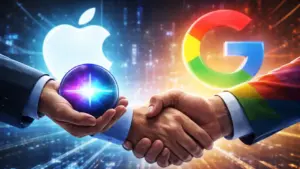
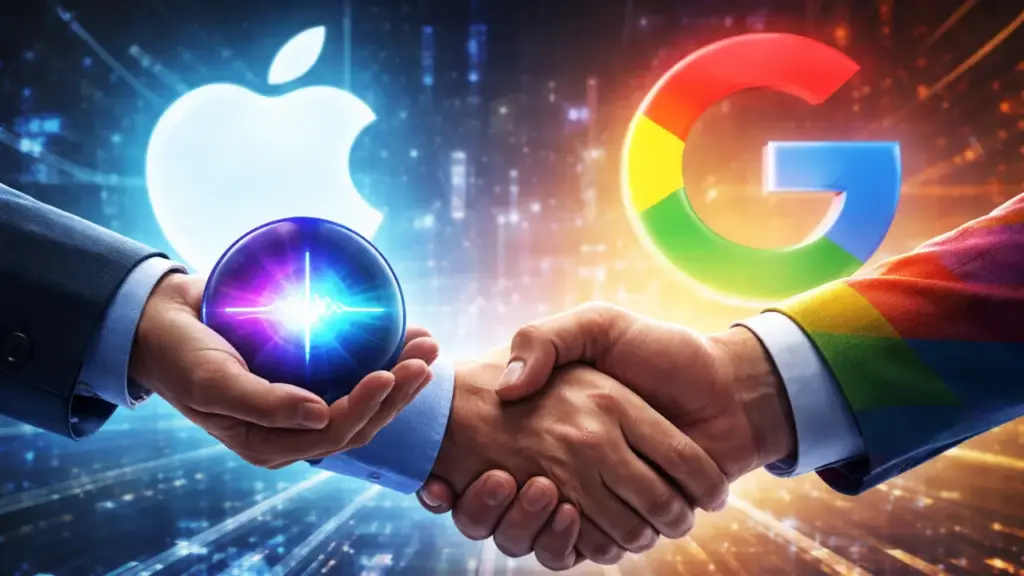
Apple does not make emotional decisions. Every major move reflects pressure or necessity. Paying Google billions to support Siri is not about convenience. It is about survival in an AI-first world.
If Apple had a competitive large language model ready, this deal would not exist. Apple would delay features. They would polish internally. They would accept criticism. But they would not outsource intelligence. This payment shows Apple reached a limit. The company could not ship a capable AI assistant fast enough on its own.
AI rewards speed. Users compare assistants daily. Lag becomes visible instantly. Apple could not afford another year of Siri falling behind. The cost of doing nothing was higher than the cost of dependence.
Siri Was Never Meant to Lose
Siri entered the market early. Apple had an advantage competitors did not. Voice assistants were new. Expectations were low. The opportunity was enormous.
But Siri stagnated. Updates focused on surface-level improvements. Real intelligence did not evolve at the same pace. Meanwhile, Google and Amazon invested aggressively. They trained larger models. They expanded datasets. They learned from billions of interactions.
Apple stayed conservative. Privacy limited data collection. Closed systems reduced experimentation. Over time, Siri became predictable. Users noticed. Trust eroded. Siri stopped feeling helpful and started feeling scripted.
This decline did not happen overnight. It unfolded quietly. And by the time Apple reacted, competitors were already generations ahead.
Control Is Apple’s Superpower — And Its Weakness
Apple’s control creates beautiful products. It also creates constraints. Modern AI does not thrive in isolation. It thrives on scale, feedback, and iteration.
Google optimized for exactly that. It embraced cloud infrastructure. It accepted messy data. It iterated relentlessly. Apple prioritized polish and protection. That approach worked for hardware. It struggled with AI.
This was not a talent issue. Apple employs world-class engineers. The problem was structural. AI development demands openness. Apple’s DNA resists it. That tension explains why Siri fell behind despite Apple’s resources.
Why Apple Couldn’t Catch Up in Time
AI innovation moves at a brutal pace. Models improve weekly. User expectations rise monthly. Hardware companies move slower by design.
Apple’s development cycles are deliberate. AI cycles are relentless. Even with massive investment, Apple could not compress learning time. Large language models improve through exposure and iteration. Privacy-first design limits both.
Apple faced a hard truth. They could keep control and lose relevance, or they could surrender some control and stay competitive. They chose the second option.
This Is Not a Partnership. It’s a Dependency.
Apple framed the deal as collaboration. Strategically, it is dependency. Google provides the intelligence layer. Apple controls the interface and experience.
That separation matters. Intelligence defines capability. Interfaces define presentation. Apple now depends on another company for reasoning, language understanding, and core assistant behavior.
This creates long-term risk. Pricing power shifts. Roadmaps align externally. Competitive leverage weakens. Apple rarely accepts that position. Yet here, they did.
The decision reflects urgency. Apple needed AI now, not someday.
The Silent Admission No One Wants to Say Out Loud
Apple lost the AI platform race for this cycle. Not forever, but clearly.
The company that reshaped mobile computing failed to lead in artificial intelligence. Hardware dominance could not compensate. Ecosystem strength could not hide assistant weakness.
This deal functions as an unspoken admission. Apple chose relevance over ideology. That choice is rational. It is also revealing.
Years from now, analysts will point to this moment as a turning point.
What This Means for the Future of Apple Products
Apple products will feel smarter. Siri responses will improve. Interactions will feel more natural. Users will notice the difference quickly.
But the intelligence will not be Apple-native. It will be powered externally. That changes Apple’s role in the stack. The company becomes a curator of experience rather than the sole architect of intelligence.
This shift mirrors challenges many startups face. Build everything internally and move slowly, or integrate external intelligence and move fast. Strategic guidance matters in these moments. This is why experienced advisors, including a fractional CTO, often play a critical role. They help companies decide when control protects value and when it blocks growth.
Apple made that calculation at scale.
FAQS
Why did Apple outsource Siri’s AI?
Because internal AI development could not match competitor speed and scale.
Is Apple abandoning AI development?
No. Apple is buying time while restructuring its AI strategy.
Does this hurt Apple long term?
It introduces dependency risks but preserves short-term relevance.
Is this common in tech?
Yes. Platform shifts often force temporary surrender to stay competi
Conclusion: The Day Apple Blinked
This was not just a deal. It was a signal.
Apple chose survival over total control. Speed over tradition. Relevance over ideology. They did not partner from strength. They adapted under pressure.
That does not mean Apple is finished. It means the AI era rewrote the rules. Even the most disciplined companies must bend.
Technology rewards execution, not philosophy. Timing beats perfection. Intelligence defines platforms.
If you want grounded analysis like this, stripped of hype and focused on real signals, startuphakk exists to ask the questions others avoid.
This was the day Apple blinked.