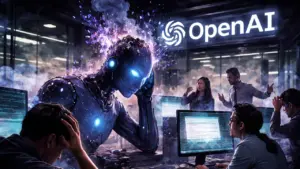

The Promise of Fully Automated Coding
Artificial intelligence has made impressive progress in recent years. Modern AI systems can generate code, fix bugs, explain algorithms, and even build simple applications from written instructions.
These capabilities created enormous excitement.
Many industry observers believed that AI coding tools would completely transform software development. The narrative became simple and compelling: machines would write code while humans focused on strategy.
Several assumptions supported this prediction.
First, AI could generate code faster than humans. Developers who once spent hours writing repetitive logic could now produce the same output in seconds.
Second, automation would reduce the need for large engineering teams. If AI could write most of the code, companies might only need a small group of developers to supervise the system.
Third, startups and small teams would be able to build complex products without hiring many engineers.
These assumptions led to one widely repeated conclusion: software development would soon require far fewer human programmers.
But this view misunderstood the real nature of software engineering.
Coding is only one small part of building technology systems.
The Reality: Companies Still Need Developers
When organizations began deploying AI tools in real development environments, they discovered an unexpected outcome.
AI helped developers work faster. But it did not eliminate the need for them.
Instead, many companies found that AI introduced new layers of complexity. The more software they built, the more skilled engineers they needed.
Surveys from technology leaders show a clear trend. Companies that adopt AI frequently expand their engineering teams rather than reduce them.
Why does this happen?
Because AI-generated code still requires human expertise in several critical areas.
Developers must verify that the code works correctly. They must ensure that systems remain secure. They must design architectures that scale as products grow.
Without experienced engineers, AI-generated code can easily create fragile systems that fail under real-world conditions.
In practice, AI tools act more like developer assistants than replacements.
They speed up certain tasks, but they do not remove the need for professional engineering judgment.
The Hidden Complexity of AI-Generated Code
AI systems can generate code quickly. But speed often hides complexity.
When developers use AI to produce large amounts of code, they must still handle many difficult technical challenges.
For example, AI-generated code may appear correct but contain hidden performance issues. In other cases, the code may work in isolation but fail when integrated into larger systems.
Security also becomes a major concern.
AI systems learn from vast datasets that include both secure and insecure coding practices. As a result, generated code may include vulnerabilities that experienced developers must detect and fix.
Another challenge involves maintainability.
Software projects often last for many years. Code must remain readable, organized, and easy to modify. AI-generated solutions sometimes prioritize quick results instead of long-term maintainability.
Developers therefore spend significant time reviewing, restructuring, and improving AI-generated output.
In other words, AI accelerates code creation, but it also increases the need for skilled engineers who can evaluate and refine that code.
The Productivity Paradox: Cheaper Code Creates More Demand
One of the most important economic principles in technology is often overlooked.
When the cost of producing something decreases, demand usually increases.
This phenomenon explains why AI tools may actually increase developer demand instead of reducing it.
If software becomes easier and cheaper to build, companies will create more software.
Organizations that previously avoided digital transformation may now invest in new applications. Startups can launch products faster. Established companies can experiment with new services without massive development costs.
As the number of software products grows, the complexity of the technology ecosystem expands.
More applications require more integrations. More integrations require better architecture. More architecture requires skilled developers.
This dynamic creates what economists sometimes call a productivity paradox.
Tools designed to reduce effort can actually increase total work because they unlock new opportunities.
AI coding tools appear to follow this pattern.
They make development faster. But they also encourage companies to build far more software than before.
AI Tools Are Multipliers, Not Replacements
The most accurate way to understand AI in software development is to view it as a multiplier.
AI amplifies developer productivity.
It helps engineers complete repetitive tasks faster. It provides suggestions for solving technical problems. It can generate templates, documentation, and test cases.
These capabilities free developers to focus on more complex challenges.
Instead of writing every line of code manually, engineers can spend more time designing systems, optimizing performance, and improving product quality.
This shift changes the nature of the developer role.
Developers become architects, reviewers, and strategists rather than pure code writers.
Organizations increasingly rely on experienced engineers who can guide AI tools effectively.
Some companies also hire technical leaders such as a fractional CTO to manage this transition. A fractional CTO helps organizations integrate AI technologies into their development processes while maintaining strong engineering standards.
This role ensures that AI improves productivity without introducing technical risks.
Why the “AI Will Replace Developers” Narrative Spread
If AI cannot fully replace developers, why did the replacement narrative become so popular?
Several factors contributed to this misunderstanding.
First, technology hype cycles often exaggerate the impact of new innovations. Early demonstrations of AI coding tools created excitement because they appeared almost magical.
Second, marketing played a major role. Technology companies promoted AI systems as revolutionary tools capable of transforming entire industries overnight.
Third, many people outside the engineering world misunderstood what developers actually do. Writing code is only one component of software development. The larger challenge involves designing reliable systems that solve real problems.
These responsibilities require experience, creativity, and strategic thinking—qualities that AI systems still struggle to replicate.
As a result, the early predictions about AI replacing developers underestimated the complexity of real-world engineering.
The New Role of Developers in the AI Era
Although developers are not disappearing, their role is evolving.
Modern engineers must develop skills that extend beyond traditional coding tasks.
Developers today must understand system architecture. They must manage complex integrations between cloud services, APIs, and data platforms.
They must also evaluate the outputs generated by AI tools and ensure that those outputs meet quality standards.
This transformation means that developers increasingly act as technology orchestrators.
They combine human expertise with AI capabilities to create powerful software systems.
Organizations that adopt this hybrid model often achieve the best results.
Rather than replacing developers, AI empowers them to build more advanced products.
The Real Bottleneck: Skilled Engineers
Despite advances in AI technology, one major challenge remains unchanged.
The technology industry still faces a shortage of highly skilled engineers.
Companies need professionals who understand software architecture, cybersecurity, distributed systems, and data infrastructure.
These skills require years of experience and continuous learning.
AI can assist developers, but it cannot instantly create experts who understand the deeper principles of software engineering.
As more organizations invest in digital transformation, the demand for these experts continues to rise.
Companies increasingly look for senior engineers, technical architects, and strategic leaders who can guide development teams.
In many cases, businesses turn to experienced advisors such as a fractional CTO to help them scale their engineering operations and integrate emerging technologies effectively.
This trend reinforces a key point: AI adoption often increases the need for human expertise rather than eliminating it.

Conclusion: AI Didn’t Kill Coding — It Supercharged It
The idea that AI would eliminate software developers now appears overly simplistic.
Instead of replacing engineers, AI tools are transforming how software is built. They accelerate development processes and enable organizations to experiment with new digital products.
But faster development also creates greater complexity. More applications, integrations, and services require skilled engineers who can design reliable systems.
As a result, developer demand continues to grow.
The future of technology will not be defined by AI versus developers. It will be defined by AI working alongside developers to create better software and solve more complex problems.
For companies navigating this transition, strategic technical leadership becomes increasingly important. Many organizations are already turning to experts like a fractional CTO to guide AI adoption and ensure that engineering teams remain effective.
Insights like these are frequently explored on platforms such as StartupHakk, where technology trends are analyzed from the perspective of real-world engineering and business strategy.
The AI revolution is real. But instead of replacing developers, it may ultimately make their skills more valuable than ever before.