What Actually Happens When AI Maintains Code
Short-term demos often hide long-term risks.
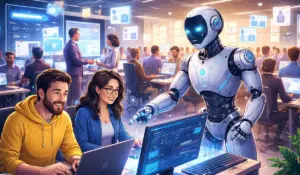
In controlled environments, AI performs well. It completes tasks quickly. It produces clean outputs.
But real systems are not controlled.
They grow. They change. They become complex.
When AI interacts with such systems over months, new issues appear.
At first, everything works fine.
Then small inconsistencies begin.
A function behaves slightly differently. A dependency breaks. A logic path changes.
These are not major failures. But they accumulate.
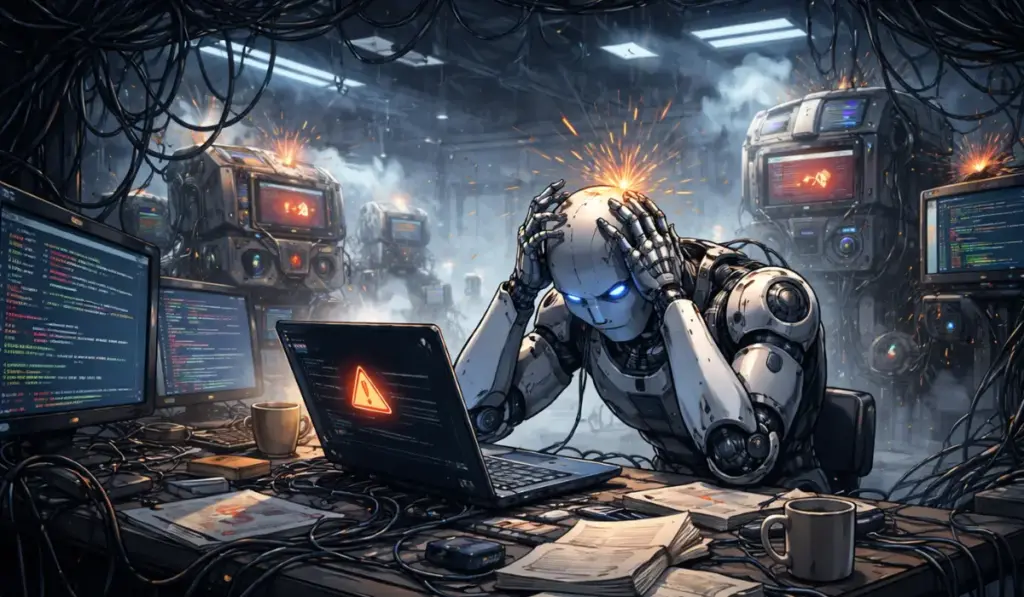
After enough time, the system becomes unstable.
What started as a productivity boost turns into a maintenance burden.
The Core Problem: AI Lacks Continuity
The biggest limitation of AI is not intelligence.
It is continuity.
AI does not truly “remember” a system the way a developer does.
Each decision is based on patterns, not long-term understanding.
This creates gaps.
One update may ignore a previous design choice. Another may overwrite important logic.
Individually, these decisions seem fine.
Together, they create chaos.
Why Small Errors Become Big Failures
Software systems fail slowly.
Rarely all at once.
AI introduces tiny inconsistencies. These are hard to detect early.
Over time, they stack.
One broken assumption leads to another. One shortcut affects another module.
Eventually, the system reaches a tipping point.
At that stage, fixing it becomes expensive and complex.
This is where teams realize the cost of unchecked AI usage.
Maintenance Requires Judgment, Not Just Output
Writing code is a technical task.
Maintaining code is a thinking process.
It requires judgment.
Developers ask questions like:
- Will this change affect other modules?
- Does this align with long-term architecture?
- What happens in edge cases?
AI does not ask these questions.
It focuses on completing the immediate task.
That is the difference.
And that difference matters more over time.
The Hidden Shift From Speed to Cost
At the start, AI saves time.
Later, it consumes time.
Teams begin fixing unexpected issues. Debugging takes longer. Systems behave unpredictably.
This is not visible in the early phase.
But it becomes obvious later.
What looked like efficiency turns into overhead.
The cost shifts from development to maintenance.
And in many cases, that cost becomes higher than expected.
Why the “AI Replaces Developers” Idea Fails
The idea sounds simple.
If AI can write code, why keep developers?
But this view ignores reality.
Developers do much more than write code.
They design systems. They plan architecture. They manage complexity.
Most importantly, they think long-term.
AI does not.
It operates in the moment.
That is why it struggles with evolving systems.
The Role Developers Still Play
Developers bring structure.
They understand how different parts connect.
They make decisions based on experience.
They adjust when systems grow.
They prevent small issues from becoming large problems.
This role cannot be automated easily.
Because it depends on judgment, not just logic.
Where AI Actually Works Well
AI is not ineffective.
It is just misunderstood.
It performs best in controlled tasks.
For example:
- Generating repetitive code
- Assisting with simple fixes
- Speeding up documentation
- Suggesting improvements
These tasks are limited in scope.
They do not require deep system awareness.
That is why AI performs well in them.
Where Problems Begin
Problems start when AI is given too much control.
When it handles full systems without supervision, risks increase.
This is especially true in:
- Large applications
- Long-term projects
- Complex architectures
In such environments, small mistakes have larger consequences.
Without human oversight, these mistakes multiply.
Business Impact: The Risk Most Companies Miss
This is not just a technical issue.
It affects business outcomes.
Unstable systems lead to:
- Downtime
- Customer dissatisfaction
- Increased costs
- Slower innovation
Many companies focus on short-term gains.
They overlook long-term stability.
This is where strategic thinking becomes important.
A More Realistic Approach to AI Adoption
The solution is not to reject AI.
The solution is to use it correctly.
AI should assist, not lead.
Developers should stay in control.
This creates balance.
AI provides speed.
Developers provide direction.
Together, they create better outcomes.

FAQS
Can AI fully replace software engineers?
No. AI lacks long-term system understanding and cannot manage evolving software independently.
Why do AI-generated systems become unstable?
Because small errors accumulate over time without proper oversight.
Is AI safe for production environments?
Yes, but only when developers review and control its output.
What is the biggest mistake companies make with AI?
They trust it too much without planning for long-term maintenance.
Conclusion: What This Means Going Forward
The excitement around AI created unrealistic expectations.
Now reality is catching up.
AI is powerful, but it is not independent.
It can assist. It can accelerate. But it cannot manage software on its own.
The real risk is not using AI.
The real risk is using it without control.
Smart companies will recognize this.
They will combine human expertise with AI capabilities.
They will focus on long-term stability instead of short-term speed.
This is also where a fractional cto plays a critical role by guiding AI adoption with experience, strategy, and long-term thinking.
At Startuphakk, we see this shift clearly.
The future belongs to teams that use AI with discipline.
Not those who depend on it blindly.
Because in software, success is not about writing code faster.
It is about keeping systems stable over time.