
The Illusion of Infinite Growth
The world treated AI like magic. Every business believed AI would solve every problem overnight. VCs poured billions into any startup with “GPT” in the pitch. Media headlines crowned AI the future of everything.
But growth has a limit. Markets have ceilings. Adoption has friction. Compute has costs.
OpenAI rose fast, but rising fast creates pressure. And that pressure is showing. The illusion of infinite growth made investors blind to red flags. Now, those red flags are too big to ignore.
Sign #1 — Losing $3 for Every $1 Earned
OpenAI’s financial model is burning cash at a dangerous pace.
The math is simple:
They earn $1.
They spend $4.
They lose $3.
This pattern doesn’t scale, even with billion-dollar partnerships. Training massive models demands more GPUs, more electricity, more engineers, and more support staff. Revenue cannot catch up at this rate. Even tech giants crumble under unsustainable burn rates.
Investors understand this. That’s why the whispers about a financial correction are growing louder.
Even a fractional CTO reviewing these numbers would panic.
Sign #2 — User Engagement Down 22%
A 22% engagement drop in three months is not a small slip. It is a structural warning.
Users complain about slower responses. They see more errors. They feel the quality dipping. Competitors—especially open-source models—are catching up fast.
Developers, who once lived inside ChatGPT, now experiment with lightweight local models that cost nothing and run offline.
Engagement is everything in consumer tech. Losing it is losing the market.
Sign #3 — A Co-Founder Called the Tech “Slop”
When a co-founder publicly calls your core product “slop,” the world pays attention.
These are not random critics on social media. These are the architects who built the foundation of the company.
Public criticism signals deeper internal frustration. It shows a leadership team that lacks alignment. And it invites competitors to take shots, because cracks at the top reveal cracks at the bottom.
Sign #4 — Leadership Turbulence and Governance Issues
OpenAI’s leadership saga shocked the world.
Firings. Rehirings. Boardroom drama. Sudden resignations.
Confusion like this never helps a company scaling at this level.
A stable organization needs stable governance. Investors trust leadership, not hype. When governance collapses, confidence collapses with it.
The chaos raised big questions.
Who actually controls OpenAI—the board, the founders, or Microsoft?
These questions remain unanswered.
Sign #5 — Safety Team Departures
AI safety is not optional. It is essential for trust.
Yet OpenAI watched key members of its safety teams leave. Some left quietly. Others left loudly. But all exits matter.
A shrinking safety team signals one thing: speed is winning over responsibility.
This is dangerous, because AI needs guardrails. Without them, risk rises fast.
Enterprise clients, especially in finance and health, notice these gaps immediately.
Sign #6 — API Reliability Is Getting Worse
Developers are the lifeblood of OpenAI. They build the apps that drive usage.
But developers now complain about API outages, slow responses, and unpredictable updates. Frequent rate limits break production systems.
This is not a small inconvenience.
This is a business blocker.
When APIs fail, companies move to alternatives.
Competitors like Anthropic, Mistral, and open-source models stand ready to replace unreliable APIs with faster and more stable ones.
Sign #7 — Open-Source Is Catching Up Fast
Just two years ago, OpenAI’s models seemed untouchable. No competitor came close.
But things changed fast.
Meta’s Llama models exploded in popularity.
Mistral released powerful small models that shocked the industry.
Thousands of developers run local models that cost nothing to use.
OpenAI’s walled-garden approach feels outdated.
Open-source models offer flexibility.
They offer privacy.
They offer independence.
Enterprises love these advantages. And many are switching.
Sign #8 — Delays in Promised Breakthroughs
OpenAI teased GPT-5 again and again.
But no clear date.
No clear progress.
No clear roadmap.
Delays slow market confidence.
Competitors deliver faster than expected.
AI innovation no longer belongs to one company. The field is crowded, and the race is not as one-sided as it once looked.
When promises stretch too long, belief breaks.
Sign #9 — Legal Pressures Keep Growing
Copyright lawsuits pile up.
Authors, publishers, newspapers, and media organizations all challenge OpenAI in court.
These legal battles drain money, time, and energy.
The biggest questions remain unanswered:
Where did the training data come from?
Were permissions taken?
Is commercial use even legal?
Uncertainty scares enterprise clients.
No big company wants to risk compliance violations.
Sign #10 — Compute Costs Are Out of Control
AI has one brutal reality: it is expensive.
Training models at OpenAI’s scale requires billions of dollars in chips, energy, and infrastructure.
Microsoft provides GPU support, but even Microsoft faces shortages.
Demand grows faster than supply.
Costs grow faster than revenue.
This is not sustainable forever.
And competitors who build efficient smaller models may win the long game.
Sign #11 — Investor Confidence Is Shaking
The same investors who pumped the AI hype now show concern.
Banks warn of a possible AI-driven economic correction.
VCs rethink their exposure.
Startups slow their hiring.
Investor confidence drives the AI market.
Without it, valuation falls.
And without valuation, innovation slows.
Confidence is fragile. And it is fading.
Sign #12 — The Public Trust Gap Is Growing
AI hallucinations still happen.
Bias issues still appear.
Misinformation spreads easily.
Enterprise clients cannot deploy unreliable models at scale. Consumers cannot trust inconsistent outputs.
Trust is essential for mass adoption.
Once it breaks, it is hard to rebuild.
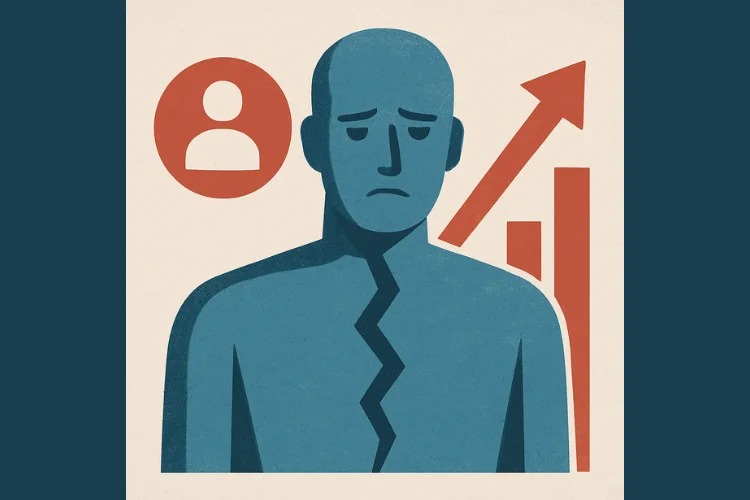
Is This a Stumble—or the Edge of the Cliff?
OpenAI changed the world in record time. It pushed generative AI into mainstream use. It inspired millions of developers. It reshaped industries.
But innovation alone does not protect a company from its own internal cracks.
The 12 warning signs we explored are not small.
They are structural.
They are interconnected.
They show a company under pressure from every direction—financial, technical, operational, legal, competitive, and cultural.
Can OpenAI recover?
Yes—but only with focus, transparency, and stronger governance.
The world still needs innovation at this scale, but innovation must meet sustainability.
No company survives on hype alone.
Investors, founders, and tech leaders must watch these signs closely. Even a fractional CTO would treat these issues as critical risks.
The AI industry is shifting.
Alternatives rise every month.
Developers explore open-source models.
Enterprises rethink their strategy.
The future remains uncertain.
But one thing is clear:
This moment will define the next decade of AI.
And the companies that adapt—not the ones that dominate—will win.
As conversations continue on platforms like StartupHakk, experts will debate whether OpenAI is experiencing a stumble or standing on the edge of a cliff. The answer may shape the future of AI itself.